Overview

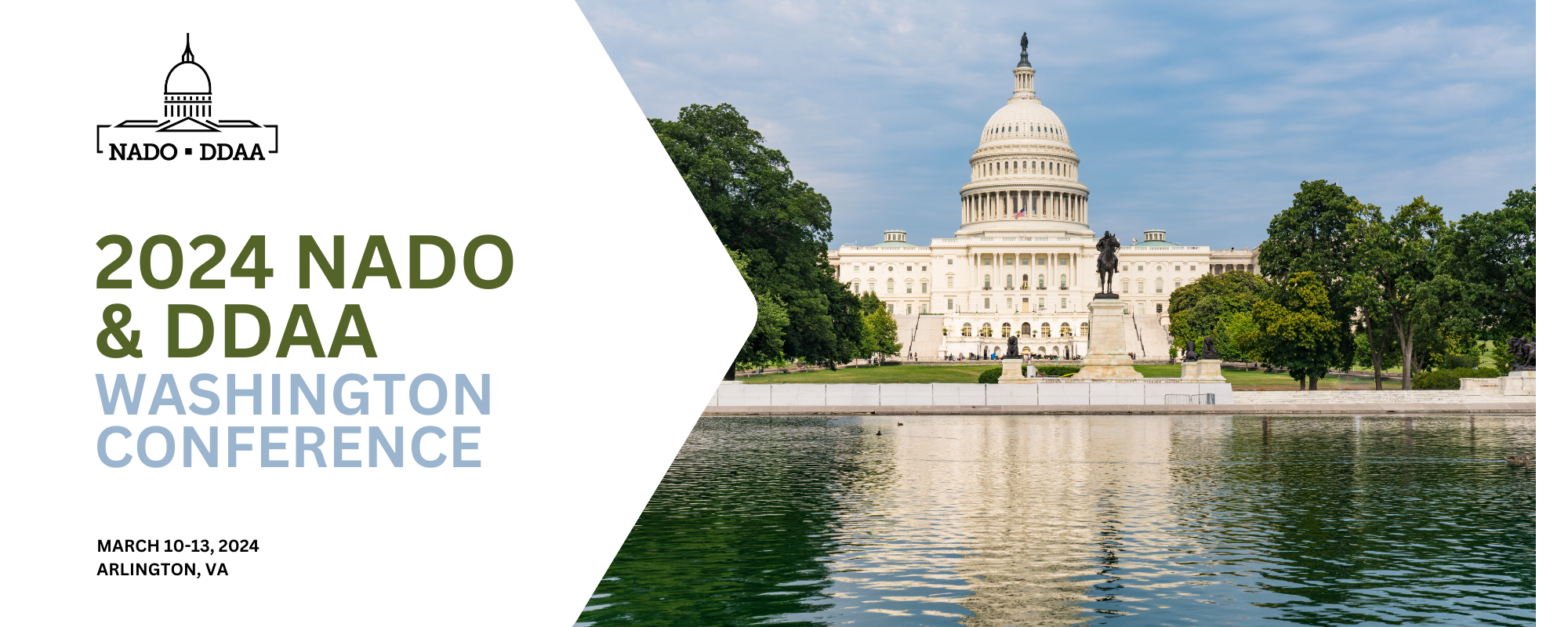
2024 NADO & DDAA Washington Conference

March 10-13, 2024 (Sunday to Wednesday)

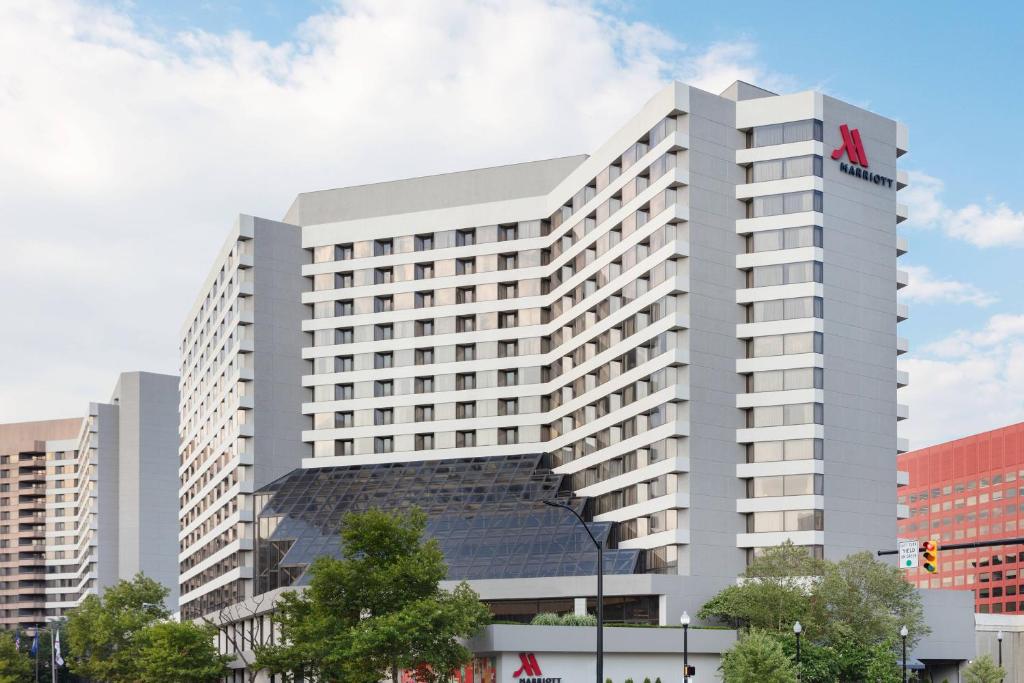
Crystal Gateway Marriott
1700 Richmond Highway
Arlington, VA 22202

Join the National Association of Development Organizations (NADO) and the Development District Association of Appalachia (DDAA) for sessions focused on regional development, the federal landscape, and the programs and policies that matter most to Regional Development Organizations and their stakeholders. 

When to Arrive

Conference content will begin on the morning of Sunday, March 10 for NADO Executive Committee members, NADO Board members, NADO Research Foundation Advisory Committee Members, and DDAA Board Members. On the evening of Sunday, March 10, an opening reception will be held for all conference attendees, as well as a dinner for DDAA members.

Conference plenary and breakout sessions begin at 9:00 a.m. on Monday, March 11 and continue through 11:00 a.m. on Wednesday, March 13. Stay tuned for more information about a post-conference training for the EDD Community of Practice on Wednesday afternoon from 11:30 a.m. to 4:30 p.m. at the conference hotel.  

 
NADO’s Code of Conduct/Anti-harassment Policy (PDF)

Registration

Registration for the 2024 NADO & DDAA Washington Conference will open November 28th.

See registration rates below. Email Karron Grant, [email protected] for assistance registering your group.

  Rate
DDAA Member*
$510
 
DDAA Spouse/Guest
$220
 
NADO Member (Non-DDAA) [Associate, General]
$575
 
NADO Member (non-DDAA) [All other upgraded levels]
$510
 
NADO Member Spouse/Guest
$220
 
Non-Member
$720
 
Non-Member Spouse/Guest
$220
 
*Please register as a DDAA Member if you hold both NADO and DDAA Memberships


Cancellation Policy

Registrants who cancel their registrations by March 1, 2024 will receive a refund minus a $150 administrative fee.

Accommodations

Crystal Gateway Marriott
1700 Richmond Highway
Arlington, VA 22202

If You Don’t Have a Room and Need One:

The group room block at the Crystal Gateway Marriott for the upcoming NADO & DDAA Washington Conference is sold out.

Nearby hotels (both are on the same airport shuttle route as the Crystal Gateway Marriott):

  • Crystal City Marriott at Reagan National Airport:
    1999 Richmond Hwy, Arlington, VA 22202 | (703) 413-5500
  • Residence Inn by Marriott Arlington Capital View:
    2850 S Potomac Ave, Arlington, VA 22202 | (703) 415-1300

If You Have a Room and Need to Cancel It:

To cancel your reservation at the Crystal Gateway Marriott, please do not cancel directly with the hotel. Instead, let us know first so that we can give your room to a person on our waitlist. Simply email NADO’s Meeting Manager at [email protected] with your request to cancel along with your reservation confirmation number. Before the reservation is transferred to someone else, your original profile and billing information will be deleted and a cancellation confirmation email will be sent.

Questions? Email [email protected].

Airport & Transportation

Getting to Crystal Gateway Marriott

Airports

When flying to Washington (WAS), there are (3) main airports:

Complimentary Hotel Airport Shuttle: Marriott airport shuttle service runs 5:00 a.m. to midnight every 30 mins. Last hotel departure is at 11:30pm. Be sure to get off at the Crystal Gateway Marriott stop (conference hotel).

Bus Station

Subway (Metro) Stations

Sponsorships

MAKE AN IMPACT.

SPONSOR NADO & DDAA’S 2024 WASHINGTON CONFERENCE MARCH 10-13.

PROMOTE YOUR BUSINESS AT THE WASHINGTON CONFERENCE. 

We are seeking potential sponsors to help support and elevate the NADO & DDAA Washington Conference!

Take advantage of this opportunity to get your company’s name and message in front of our conference attendees from organizations across the country that collectively assist thousands of cities and counties with community development, economic development, regional planning, and providing various public services to their communities. 

The Washington Conference is NADO’s policy meeting which overlaps with DDAA’s Annual Conference and brings in an expected audience size of roughly 400 attendees, including many federal government officials. These decision makers could be the perfect audience to provide information to and about your company’s products and services.

Contact Brittany Salazar at [email protected] for more information about sponsorships.
 
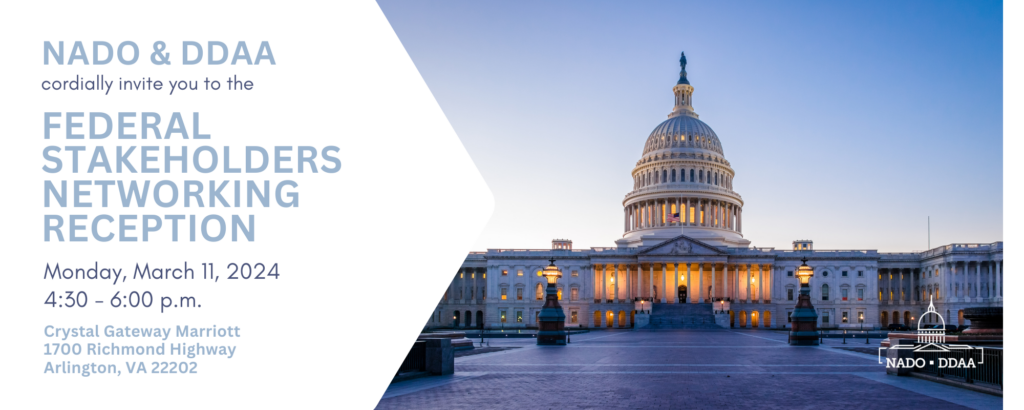
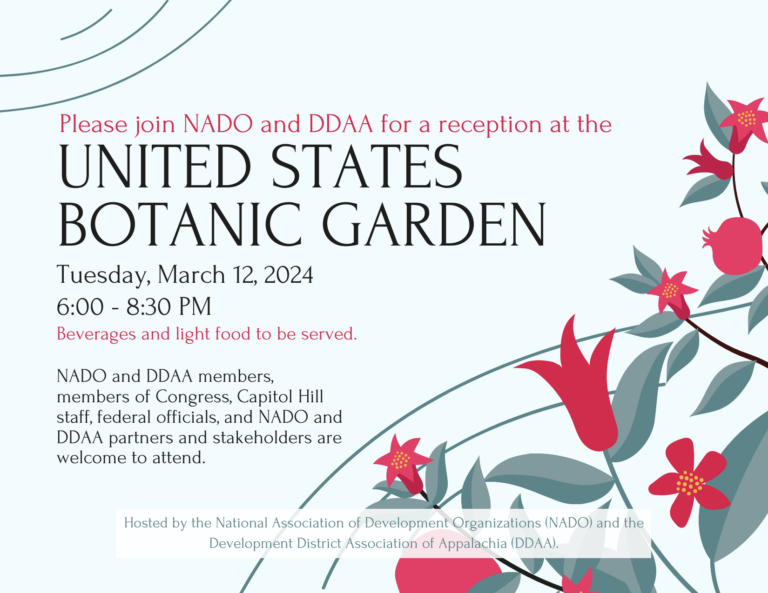
When:
Monday, March 11, 2024 from 4:30-6:00 p.m.

Where:
Crystal Gateway Marriott, 1700 Richmond Highway, Arlington VA
(note: there is more than one Marriott in the vicinity. Be sure to follow signs for the Crystal Gateway Marriott specifically)

Who: 
Federal agency staff and leadership, national associations, other stakeholders in the
community and economic development field, and NADO and DDAA members

Details:
This event is free to attend; beverages and light refreshments will be provided

The NADO & DDAA Federal Stakeholders Networking Reception provides an opportunity for federal agency staff and leadership, national associations, and other stakeholders in the community and economic development field to interact with one another, and with NADO and DDAA members from across the country. The reception also serves as a chance to hear about how local organizations are implementing existing programs and resources across the country, and to inform stakeholders about the resources that are available to them. NADO and DDAA members look forward to the opportunity to meet and interact informally with representatives from federal agencies and other key organizations that are relevant to their work. 

Each participating federal agency or stakeholder organization will be assigned a table with a sign indicating which agency/organization you represent. You are also welcome to bring promotional materials (optional) to place on your table. NADO and DDAA members will walk among the tables and interact with those in attendance.
Questions? Email Jamie McCormick at [email protected]

Presentations from the
2024 NADO & DDAA Washington Conference

If presentations are available, they will be hyperlinked in the name of the presenter under each session. 

Monday March 11, 2024
  • 10:45 AM-12:00 PM
    NADO Federal Transportation Program Updates 
    This session will featured U.S. Department of Transportation staff and leadership who will provided updates on programs, initiatives, and funding opportunities that can be utilized for transportation planning, rural transit, and other regional transportation activities.
    Rob Hyman
    Spencer Stevens
    Marianne Stock
    Kevin Adam

  • 10:45 AM-12:00 PM
    What Data Says About the Housing Crisis
    This breakout session explored the origins and current implications of the unfolding housing crisis. Panelists discussed examples of data sources that communities can utilize to develop their housing strategies.
    Betsy McGriff
    Maggie Riden
    Keith Wiley
    Nathan Ramsey

  • 10:45 AM-12:00 PM
    Strengthening Employers and the Workforce with Recovery-to-Work Ecosystems
    During this session, communities that are building recovery-to-work ecosystems that coordinate and support service providers as they help individuals move from treatment into employment were highlighted. This session also discussed how regions are supporting substance use mitigation efforts across the country.
    Brendan Buff
    Peter Gaumond
    Michelle White
    Erin Sparks

  • 12:15 PM-1:30 PM
    Plenary Luncheon – Artificial Intelligence: Impacts on Businesses, the Workforce, and the Economy
    Artificial Intelligence (AI) has been a prevailing topic of conversation in recent years. This session addressed common questions about the emerging field of AI, and how it will affect regional economies in the coming years. This panel of AI experts and practitioners also addressed how Regional Development Organizations can manage these impacts and take advantage of potential investments in their regions.
    Denise Hall
    Leigh Hopkins
    Steven Lee
    Heather Feldman

  • 1:45 PM-3:00 PM
    NADO Housing Planning for the Future
    Housing affordability challenges have had serious community and economic development impacts on communities and regions. During this session, attendees heard from successful regional housing planners on how their regions have created regional and local housing plans emphasizing practicality, project implementation, and community buy-in. 
    Anthony Starr
    Kevin Byrd
    Andrew Coker

  • 1:45 PM-3:00 PM
    NADO Equity and Place-based Economic Development
    Team members from the University of Michigan Economic Growth Institute, the New Growth Innovation Network, and the U.S. Department of Commerce Economic Development Administration shared about equity in economic development programs and coalitions. This interactive session included early findings on equity and inclusion practices from 53 federally-funded place-based economic development programs as well as an engaging discussion and around applying the learnings to attendees’ regions and programs. 
    Sarah Crane
    Yasmina McCarty
    Bernadette Grafton

  • 1:45 PM-3:00 PM
    Artificial Intelligence is Changing the Community Development Landscape
    During this moderated discussion, panelists shared how artificial intelligence (AI) is impacting community and economic development, public sector governance, service workers, and local economies. Panelists also discussed public policy issues that policymakers should address in order to ensure that AI is a positive force on community economic and social well-being.
    Sarah Kemp
    Michael Zimmer
    Betty Young
    Tom Johnson
    Trace Johnson
Tuesday, March 12, 2024                                      
  • 9:15 AM-10:15 AM
    Insights on the Political Landscape
    This session featured DC insider David Wasserman, who will provided his insights on the ever-changing political landscape, the upcoming 2024 election cycle, the balance of power in Congress, and forecasting on what to expect in 2024 and beyond.
    David Wasserman

  • 10:30 AM-11:45 AM
    Using ARC’s ARISE to Build Relationships Between Neighboring LDDs
    How did two very small, very rural Local Development Districts partner to design a successful application for the Appalachian Regional Commission’s Appalachian Regional Initiative for Stronger Economies (ARISE) funding? This session focused on how to build a strong relationship with a neighboring LDD and a brief discussion of the workforce development project that successfully received ARC ARISE funding as a result of this partnership.
    Chelsea Robertson
    Frank Thompson
    Jennifer Lench
    Kyle Wilber

  • 10:30 AM-11:45 AM
    How GIS Mapping Helped Respond to EPA Regulations
    The Georgia Mountains Regional Commission utilized global positioning system (GPS) and other digital data technology in order to map all water, sewer, and stormwater features for a city. Leveraging this technology has had numerous benefits, including unexpected ones. This session highlighted how this effort enabled the city to add needed information to water meters in response to the U.S. Environmental Protection Agency’s Revised Lead and Copper Rule.
    Faith Bryan
    Sitney Day
    Heather Feldman

  • 1:30 PM-2:45 PM
    Building Capacity to Support Business Development Across Appalachia
    During this session, attendees learned how rural regions are leveraging their local community assets to support the growth and development of community makerspaces, in an effort to encourage business and export development across Appalachia.
    Deacon Stone
    Leslie Wrenn Drake
    Jen Simon

  • 1:30 PM-2:45 PM
    Tourism: Powering Local Economies and Empowering Workforce Development
    The First Tennessee Development District, in partnership with Northeast Tennessee Tourism, are bolstering the local economic and workforce by helping high school students and emerging industry leaders learn about the rich career opportunities that exist in the hospitality and tourism industry. In this session, attendees learned how this partnership provides participants with hands-on experiences at day-long, industry-led, interactive events hosted at two of the region’s premier tourism locations. This session also highlighted an additional project that prepares graduates for entry or advanced promotion into a range of management positions in culinary, food and beverage, lodging, attraction, and tourism-related industries.
    Lottie Ryans
    Alicia Phelps
    Mark Stevans 

  • 1:30 PM-2:45 PM
    Strategies for Regional Transit Planning
    Rural areas often face unique challenges related to transit planning. Services restricted to single counties can pose obstacles, given that key destinations in rural areas are remote. How are Appalachian communities beginning to work to comprehensively address regional transit planning? Join this session to learn about rural practitioners’ strategies to enhance regional transit planning in their region.
    Adam Hazell
    Mark Farley
    Carrie Kissel

Wednesday, March 13, 2024
  • 8:30 AM-9:45 AM
    Plenary Breakfast – The Biden Administration’s Place-based Approach and Commitment to Energy Communities
    Leaders from the White House National Economic Council and the U.S. Department of Energy discussed the Biden Administration’s approaches for fostering community prosperity and addressing regional inequality. This session included an overview of the efforts of the Interagency Working Group on Coal & Power Plant Communities (IWG) to support the revitalization of coal and power plant communities’ economies. The IWG was created through an Executive Order signed by President Biden and is charged with leading the Administration’s economic revitalization work in order to help mobilize the nation’s clean energy future.
    Lael Brainard
    Alex Jacquez
    Brian Anderson
    Chris Fetzer

  • 10:00 AM-11:00 AM
    Closing Plenary – Economic and Community Development: Aligning Innovative Solutions
    The conference’s closing session featured perspectives from key national organizations working to support practitioners in the community and economic development fields. Panelists shared their insights on how they are helping their stakeholders harness emerging opportunities, align strategic goals, navigate the evolving federal policy landscape, compete for federal funding resources, and navigate change. These thought leaders also shared their perspectives on what’s working in the economic and community development realms, versus what challenges continue to pose significant barriers for communities.
    David Lipsetz
    Dell Gines
    Matt Josephs
    Kenneth Poole

  • 11:30 AM-4:30 PM
    An Afternoon with the Districts
    An interactive half-day training and networking event for Economic Development District (EDD) staff hosted by the NADO Research Foundation (NADO RF) was held after the conclusion of the Washington Conference. This afternoon workshop focused on data and metrics, and included training and conversations on how EDDs can best incorporate data into their Comprehensive Economic Development Strategies (CEDS) and other regional planning efforts. Click here to access presentations and materials from this event. 

Search NADO.org