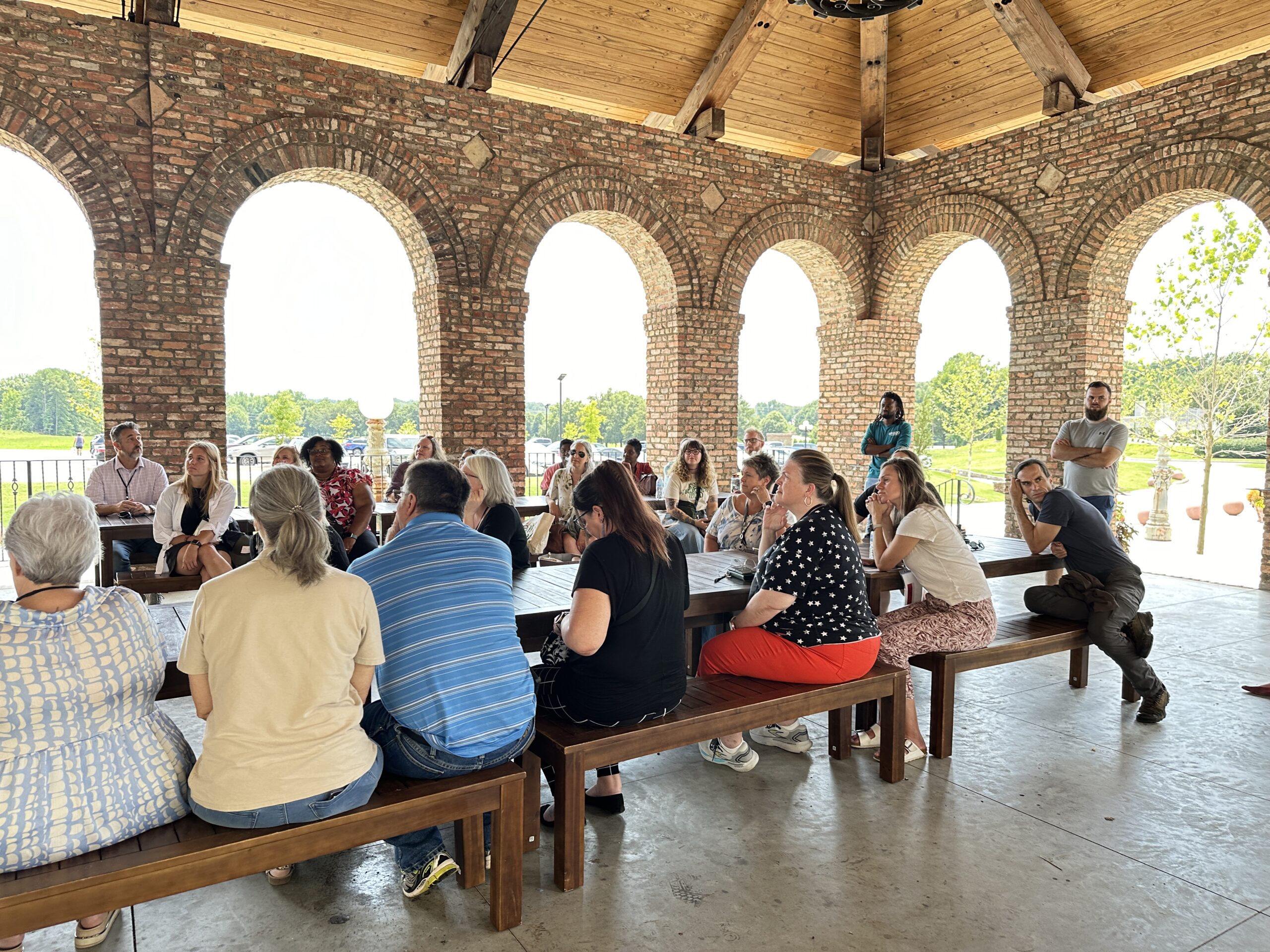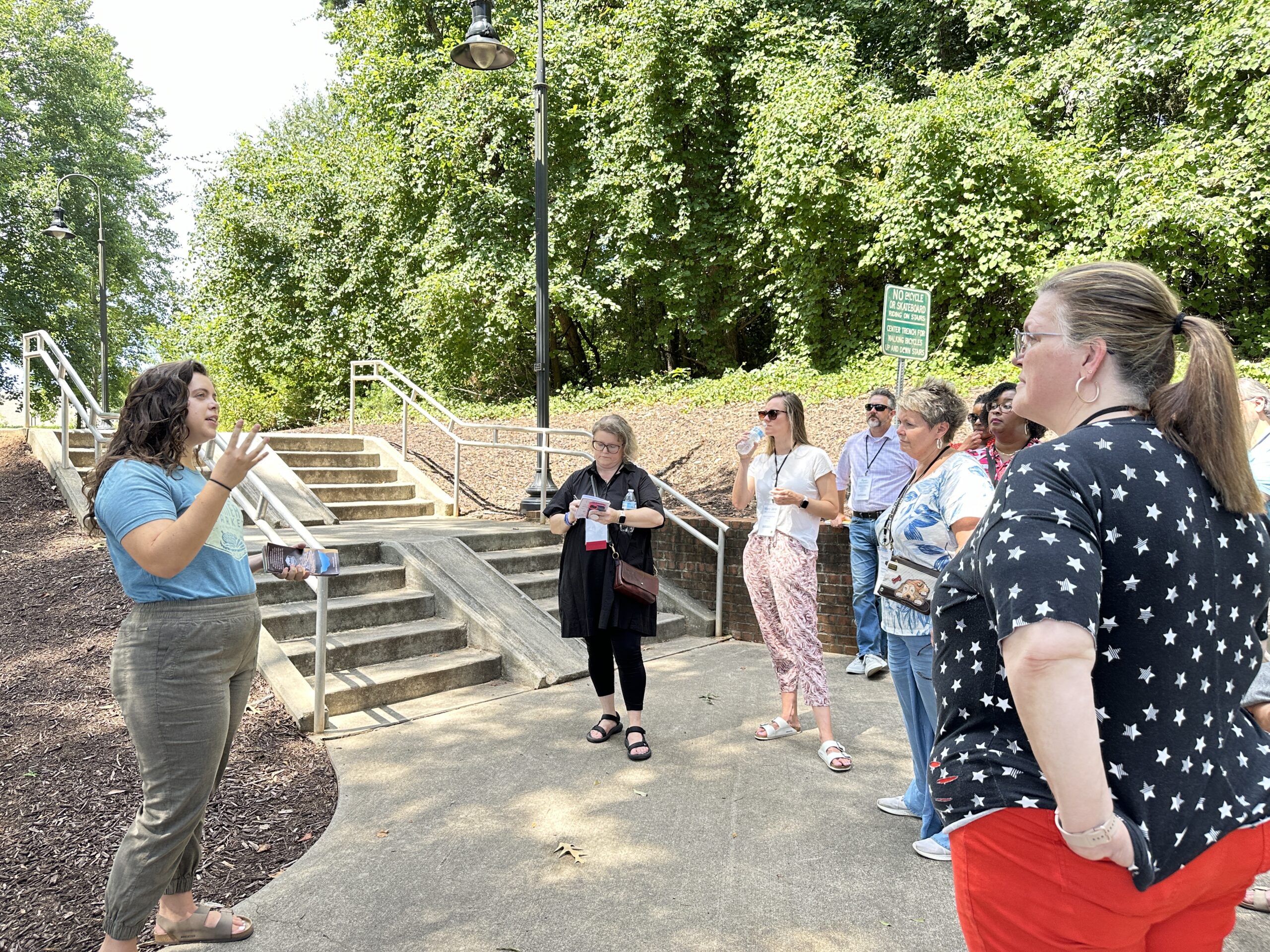

During the first-ever EDD Wealth Creation Summit: Building Equitable Regional Economies in Greenville, South Carolina, attendees had the opportunity to participate in a mobile workshop to a variety of stops along the Swamp Rabbit Trail.
The Prisma Health Swamp Rabbit Trail Network is a 28-mile multi-use (walking and bicycling) greenway that traverses along the Reedy River, an old railroad corridor and City parks to connect Travelers Rest with the City of Greenville, South Carolina. However, the trail is expanding south of Greenville as well, to the communities of Mauldin and Simpsonville.
The tour provided a view of recreation asset creation as an economic development strategy from three different perspectives:
The tour also showed how regional assets like recreation trails can create a more cohesive regional identity among various localities and facilitate a sense of connection between downtowns, suburban communities and large institutions.
The branding of the Swamp Rabbit Trail has been especially successful, as it is a creative tie to the history of the facility and the region; its broad name identification (including its part in the Swamp Rabbit Café and Grocery) further contributes to the sense of regional identify it seeks to foster.
We started in Greenville at the hotel; however the trail can be found right downtown in Falls Park. Our first stop was Travelers Rest, a community that got its name in the 1800s because it served as a rest stop for those traversing the Blue Ridge Parkway. Then in 1888, the Greenville and Northern Railway train, nicknamed the Swamp Rabbit (because it hopped over shoddy and uneven tracks along the swampy banks of the Reedy River like the swamp rabbit native to the area), brought travelers through Travelers Rest as a stop between Greenville and River Falls. Travelers Rest thrived until the 1980s and 1990s when textile mills and local storefronts shut down. In 2009, the rail line was converted into the Swamp Rabbit Trail. The trail opened in stages; the first section was a 9-mile greenway that connected Greenville and Travelers Rest. The trail has had a significant impact on the local economy of Travelers Rest, with shops and restaurants near the trail reporting up to an 85% increase in revenue. “The first year that the trail was open they had about 15,000 people [who] used it,” says Tim Todd, Director of Discover Upcountry Carolina. “Now it’s about half a million people a year.” [1]
This all spurred the revitalization of downtown Travelers Rest, adding a variety of retail shops and restaurants to the offerings. The trail is estimated to generate $6.7 million in tourism revenue annually.
According to Dianna Gracely, former Travelers Rest City Administrator, “Trail conversion happened at the same time as downtown revitalization. The trail is parallel to Main Street. We went from 30% occupancy to 100% occupancy. It truly made Travelers Rest what it is.”
The community of Travelers Rest provides a great example of iterative placemaking. This is exemplified by how the trail created momentum for a variety of other forms of development in Travelers Rest, including the development of the farmers market as well as restoring the Travelers Rest Inn, which in turn will be an anchor in the future city park adjacent to it.
[1] Chandra, F. 2024. How the Swamp Rabbit Trail Put a Small South Carolina Town on the Map. https://www.thrillist.com/travel/atlanta/bike-the-swamp-rabbit-trail-south-carolina
“The Swamp Rabbit Trail was a great workshop for me, one who's just learning about wealth creation. I had no idea that something as "simple" as a biking or running trail could create so many opportunities for communities socially and commercially. For it to be so popular that it became the cornerstone for the cafe/farmer's market and the new development we went to as the last stop was eye-opening. I just didn't know it could be that important.”
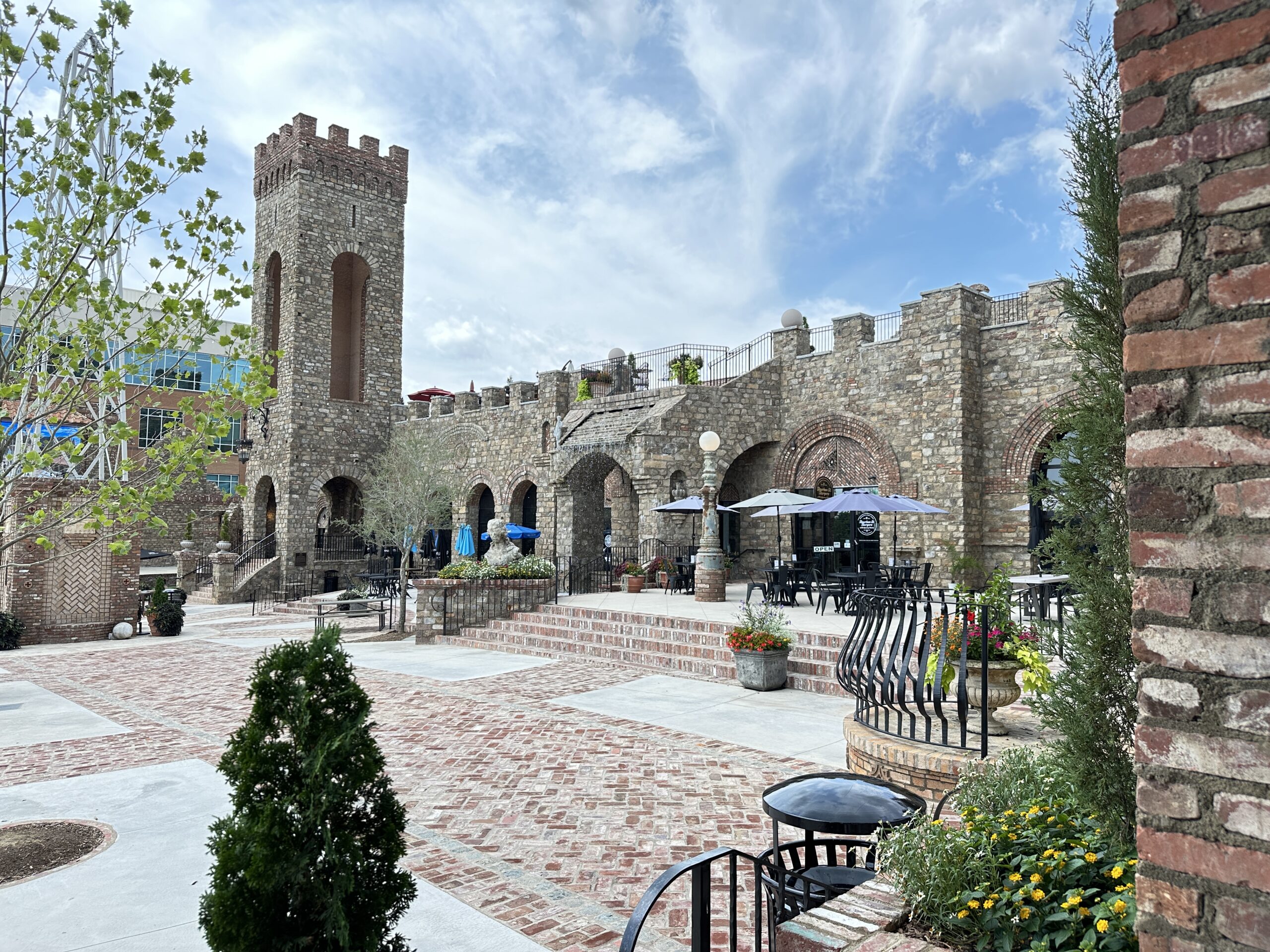
Our tour ended at the Bridgeway Station and the BridgeWay Brewery in the City of Mauldin.
In Mauldin, the pedestrian bridge connection over the six-lane Interstate 385 and the BridgeWay Station development were the key pieces of an interesting project that attempted to bring the economic development potential of the Trail across a major barrier (the interstate). BridgeWay Station features a variety of retail shops and restaurants as well as housing, all in an Italianate building style. The pedestrian bridge will also serve to connect the BridgeWay Station offerings to the greater Mauldin community, as well as the Mauldin City Trail and eventually the Mauldin City Center.
It is too early to tell how integrated Mauldin will feel with the Trail, but it was a great example of a project where the developer has come to be invested in the success of the recreation trail and feels their project is more than just an isolated town center because of it. There was a strong sense of shared vision and buy-in from the City and the developer.
“The best was The Swamp Rabbit Trail Tour- experiencing the trail and hearing from individuals along the way was super useful and inspiring. It also allowed for lots of conversation with attendees along the way. The lunch and visit to Swamp Rabbit Cafe was a personal highlight.”
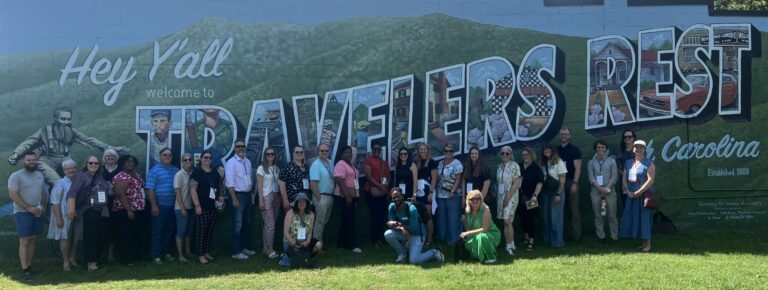
The pedestrian bridge in Mauldin was also the key to expanding the trail to Simpsonville and Fountain Inn. Dianna Gracely, Simpsonville City Administrator and former Travelers Rest City Administrator, joined us to talk about the plans taking shape in Simpsonville. Dianna was intimately involved in the trail coming to Travelers Rest. In Simpsonville, there is a section of about 9/10 of a mile that will then connect to the community of Fountain Inn. Dianna has been focused on getting easements from private property owners. There is also a plan to develop a shared-use path which will be the first section of the Swamp Rabbit Trail in Simpsonville.
The cities of Fountain Inn, Mauldin and Simpsonville – the Golden Strip – are working together to ensure that all three communities benefit from the Swamp Rabbit Trail.
It’s estimated that 2 million people use the trail annually. According to Ty Houck, Director of Greenways, Natural and Historic Resources for Greenville County Parks, Recreation & Tourism, 1/3 are using it for transportation.
“The best session was the Swamp Rabbit Trail tour. I was impressed with how many people we got to hear from and amazed to see first-hand the impacts of the trail in the community. I am working on a trail connectivity project between our region's communities and I plan to take back many things from the Swamp Rabbit Trail.”