During the in New Orleans, LA, two mobile workshops were organized to illustrate wealth creation concepts and how communities are keeping wealth local: the Lafitte Greenway and Tour of New Orleans’ Cooperative Businesses and History.
Lafitte Greenway: Transformative Community Asset
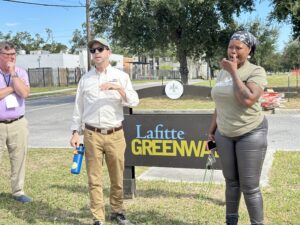
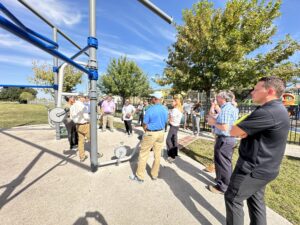
The Lafitte Greenway is a transformative urban park in New Orleans, stretching 2.6 miles and serving as a vibrant corridor for recreation, community events, and sustainable development. The Greenway serves as a vibrant example of how local investments can spur wealth creation while serving as a catalyst for local economic growth and the promotion of community engagement and resilience. The Greenway was originally constructed as a canal that played a critical role in the city’s history, transportation, and development, it also later served as a railroad line before becoming the Greenway. Today, this city-owned space is home to the largest outdoor public fitness program in New Orleans, called GetFit the Greenway, run by Lafitte Greenway Partnership. GetFit the Greenway draws in around 1,600 visitors yearly for fitness offerings and hosts a bike path used by 1,000 daily, with usage quadrupling during large events like Mardi Gras and Jazzfest. The bike share program, available for just $5 a month, provides affordable transportation options, enhances mobility for residents, and connects them to the broader city landscape.
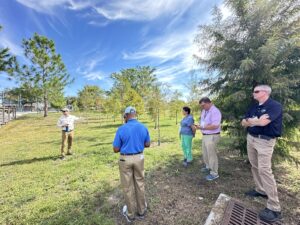
Alongside its recreational offerings, the Greenway promotes climate and environmental resilience with stormwater management features like a rainwater swale and over 500 native cypress trees planted since 2022. The Greenway also features a 5,000 square foot demonstration rain garden. Additionally, a community-based data-gathering project used innovative measures like infrared cameras to help monitor playground temperatures to inform residents about on-the-ground climate impacts.
The park also supports local economic growth, attracting $330 million in real estate investment since it was constructed in 2015, around 30% of which was the construction of 1,114 new permanently affordable housing units and public sector projects like the Greenway Station, a former brake-tag facility that has been converted into an events pavilion for local festivals, further strengthening connections among residents.
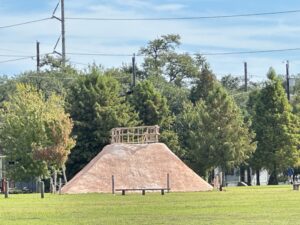
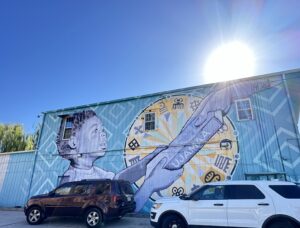
The Great Lawn offers a community gathering space as well as public art, including a mound sculpture called Nanih Bvlbancha, reminiscent of Poverty Point mounds, a UNESCO World Heritage site, which are an ancient, large-scale earthwork complex in northeastern Louisiana, built by indigenous peoples over 3,000 years ago.
Close to 10,000 people live within a five-minute walk of the Greenway, highlighting its importance as a central hub for cultural connection, climate resilience, and local economic empowerment, fostering a healthy, thriving community in New Orleans.
Current efforts to establish the Lafitte Greenway Economic Development District (EDD)1 and explore value capture mechanisms are aimed to ensure that the economic benefits of the Greenway remain within the community.
1 Louisiana uses the term EDDs for organizations that are more akin to local development organizations, not Economic Development Districts. Economic development districts in Louisiana are a proactive tool that communities can utilize to create or accelerate growth in a defined area within their corporate boundaries. The framework for economic development districts was created by state legislative mandate, but the legal ability to establish a district is afforded to either parish or local government. In some cases, these districts can be cooperative efforts between local and parish governments. https://www.opportunitystlandry.com/about/economic-development-districts


Cooperation New Orleans
Another mobile workshop offered during the 2024 Annual Training Conference included a discussion of mutual aid societies and how they evolved into the rich history of cooperatives in New Orleans, led by Cooperation New Orleans.
The history of mutual aid societies in New Orleans is deeply intertwined with the city’s cultural and social fabric, particularly among marginalized communities. Mutual aid societies in New Orleans emerged in the 19th century, primarily among free people of color and immigrant communities, as a response to systemic discrimination, economic hardship, and the lack of support from public institutions. The societies aimed to provide
members with essential services, including financial assistance for medical bills, funeral costs, and support during times of crisis, playing a crucial role in fostering community solidarity and resilience. In recent years, mutual aid societies have seen a resurgence, especially during crises like Hurricane Katrina and the COVID-19 pandemic, reemerging as grassroots organizations focused on community empowerment, while addressing social inequities. Overall, mutual aid societies in New Orleans reflect the city’s diverse history and the enduring spirit of cooperation and support among its communities.
The first stop was to Gentilly to one of the first nursing homes in the US and St. Mary’s Academy, run by the Sisters of the Holy Family, which was the first group of African American nuns. The tour moved through the cemetery area, where there is a history of mutual aid societies purchasing crypts for members.
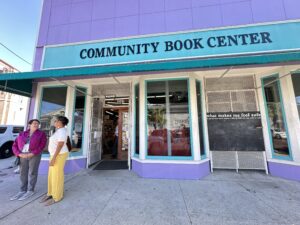
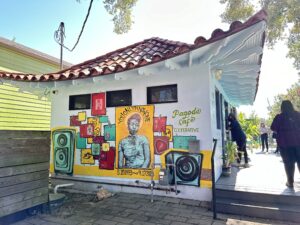
The legacy of mutual aid societies and community cooperation is also evident in predominantly black neighborhoods like the Treme and Bayou Road. Bayou Road is the oldest street in New Orleans, originally traveled by Native Americans and then the French. Over time, Bayou Road became a place dominated by thriving black-owned businesses. The tour visited a variety of Bayou Road businesses, including the Pagoda Café, a worker-owned cooperative on Bayou Road, showcasing how cooperative business models can empower local entrepreneurs and foster economic resilience. The Pagoda Cafe was established in 2013 and then transitioned to worker ownership in 2022, with the help of Cooperation New Orleans.
Cooperation New Orleans is a dynamic initiative focused on empowering communities by supporting cooperative and worker-owned businesses, reducing financial barriers and fostering a culture of mutual aid and collective entrepreneurship. Formed with the vision of economic equity and community resilience, Cooperation New Orleans offers resources and technical assistance to cooperatives, especially in historically marginalized communities like Treme and Bayou Road. Through services including strategic planning, legal assistance, financial counseling, and access to non-extractive loans through SEED Commons, Cooperation New Orleans helps individuals and groups looking to start or grow their own enterprises overcome traditional barriers to business ownership, like lack of collateral or credit. Through workshops, community events, and resource mobilization, Cooperation New Orleans aims to establish a sustainable network of cooperative enterprises, ultimately keeping wealth and cultural capital within the community and paving the way for generational wealth and local empowerment.
Efforts like the SEED Commons initiative ensure that “no one who takes out a loan is left worse off,” providing a supportive framework for local entrepreneurs. As of 2024, Seed Commons is a network comprising 23 actively lending local funds. Seed Commons has made $88 million in non-extractive investments since 2011, across 396 loans, through 39 network member organizations around the US.
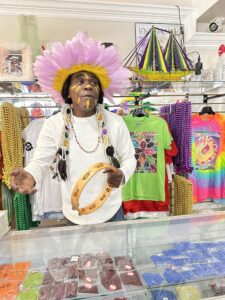
The last stop was another beneficiary of Cooperation New Orleans’ and Seed Commons’ assistance, the Beautiful Creole Apache and Keep it in the Culture Coop, a worker-owned cooperative providing affordable craft and costume materials to the Black Masking Indian community of New Orleans, committed to the development of inner city youth creating their own success through cultural arts and entrepreneurship. The Beautiful Creole Apache provides a comfortable and safe workshop space for youth artists to create and learn how to develop entrepreneurial skills from their work. Big Chief Beautiful shared his story of moving from addiction and homelessness to charting a new course for his future through sewing, showed off his store and two of his 30 Mardi Gras suits, and performed a song.
Despite the challenges of accessing capital, cooperatives offer innovative solutions, helping individuals start businesses while preserving cultural heritage. Initiatives like Cooperation New Orleans connect resources and support to help aspiring entrepreneurs keep wealth within the community.
As New Orleans continues to navigate its economic landscape, the focus on cooperative business models and community-driven initiatives highlights the potential for building generational wealth while preserving the cultural identity that makes the city unique. By prioritizing local investments that nurture community resilience, enhance quality of life and support the economic empowerment of New Orleans residents, New Orleans is paving the way for a more equitable future, where wealth stays within the community, empowering residents and celebrating their rich cultural heritage.


Takeaways: