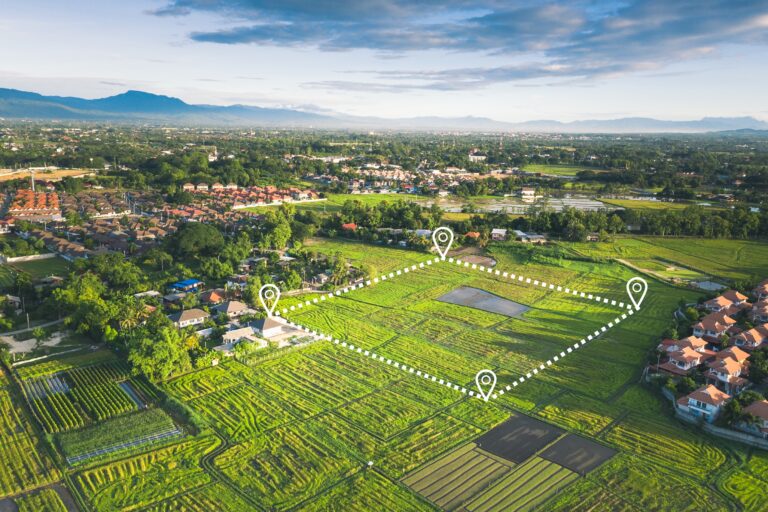
Land banks can be an effective administrative tool for EDDs as they work to help communities solve housing challenges. Traditionally, a land bank is an aggregation or collection of properties that are held by a local government, RDO, or other nonprofit entity for a specific development purpose or priority. Land banks can hold properties with both existing structures on site and vacant properties to ensure that affordable housing developers have a consistent source of affordable land for future development. Land banks are particularly useful for regions with an excess of underutilized or blighted properties that can be converted into housing. For land banks to be successful, regions must establish a fair process for determining which developers they work with, which properties are prioritized for redevelopment, and who benefits from redevelopment opportunities in the region. If implemented correctly, land banks can also be a source of net revenue with a cyclical funding model that supports itself over time. Additionally, land banks can be used in tandem with other development strategies in the region like tax incentives for affordable housing development to reduce overall project costs and maintain low-moderate income residency requirements on new development in a region.
Land bank programs are particularly impactful at targeted neighborhood revitalization. In many cases, underserved neighborhoods have one or two ‘problem’ properties that have been abandoned for years, contribute to vagrancy, detract from the neighborhood character, and reduce surrounding property values. Getting these problem properties into a land bank can begin the redevelopment process and help stabilize neighborhoods that have historically been undeserved. Additionally, redevelopment of these properties can contribute to property tax collections for local governments. Land banks can help turn these properties from outstanding bills on the local government’s books into properties that contribute to annual property tax collections.
The Land Bank Process
Step 1: A vacant or blighted property is identified that has an owner with an excessive tax lien they are unwilling to pay.
Step 2: The local government that has code enforcement and taxing authority over the property declares the property to be a public nuisance or blight through an established legal process. During this process, the owner is given the chance to improve the property or pay the outstanding tax lien.
Step 3: If no improvements are made or the lien is not met by the assigned deadline, the property is deeded over to the local government and can be transferred to the established land bank.
Step 4: The land bank now has control over the property and can assess its condition. Is there a structure on the property? Can the structure be reasonably salvaged or improved to be housing? Is demolition required on any aspects of the property? Are there harmful environmental conditions that need to be mitigated before housing is constructed on the property?
Step 5: After the lien is cleared and the property is evaluated, the land bank can recruit developers to improve the property through either new construction or rehabilitation of an existing structure.
Step 6: With a development plan in place, the land bank can sell the property to the developer with contractual restrictions. Common contract clauses include restrictions on selling the property to low-mod income or first-time home buyers, residency requirements, or environmental mitigation requirements for known hazards on the property.