Western Piedmont Council of Governments Regional Housing Growth Toolkit

Economic Development Districts (EDDs) can use in-house community and economic development planning experience to provide localized recommendations and strategies for their member communities as these communities take on affordable housing challenges.

From 2017-2022, average single-family home sale prices increased 59.8% across the country with an 18.7% jump from 2021 to 2022 alone. Federal Housing Finance Agency – Seasonally Adjust Purchase Only Index (May 2022) and Visual Capitalist (2022). Affordability challenges are no longer solely an issue in dense, large cities. Housing challenges face every type of community.

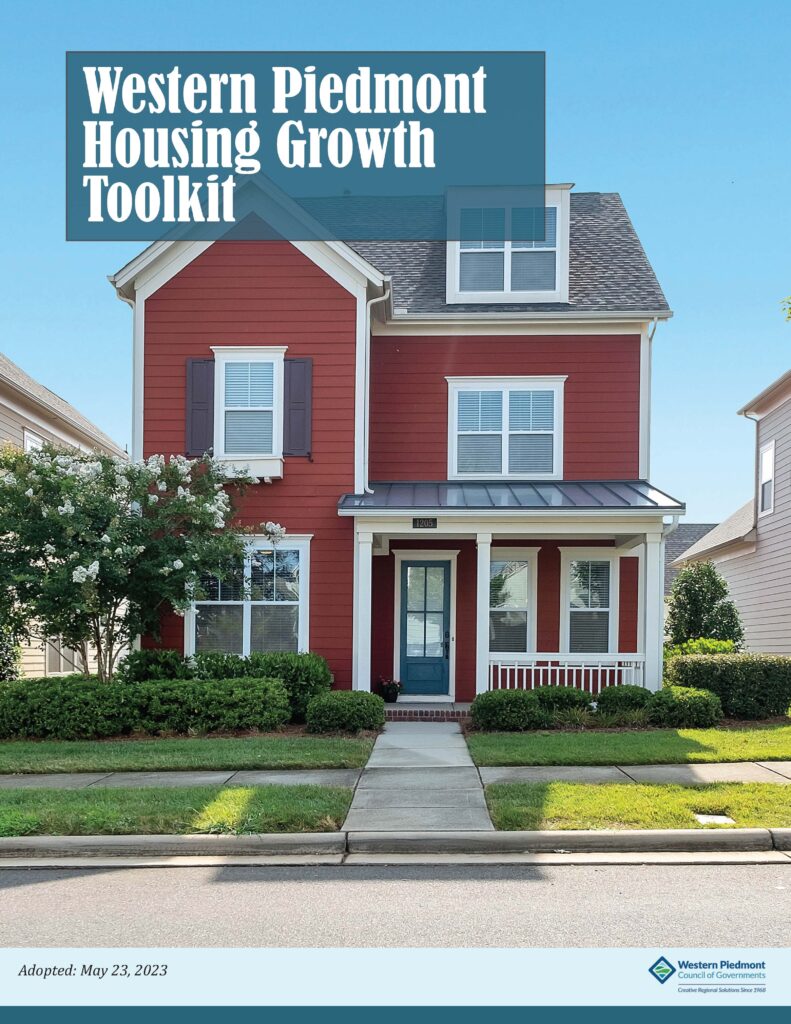
Western Piedmont Council of Governments/Economic Development District (WPCOG) in North Carolina has taken a leading role as the regional housing planner through the development of a new Western Piedmont Housing Growth Toolkit. By directly linking positive housing outcomes for residents with future regional economic growth, WPCOG planners are showing how regional economic development planning and housing planning can inform and strengthen each other. Through the Western Piedmont 2022 CEDS, the Western Piedmont CEDS Strategy Committee adopted four strategies to address housing challenges and their economic impacts on the region. WPCOG has made significant progress on these strategies with Strategy 3 being the completion of this Housing Growth Toolkit.

From 2013 to 2023, average single-family home sale prices in the Western Piedmont region doubled from $120,000 to $250,000. Additionally, 37% of renters in the largely rural region are considered housing burdened (spending 33% or more of their income on housing costs). By providing specific planning recommendations and aspirational strategies for increasing housing supply production, WPCOG is bringing the latest trends in housing policy to the Western Piedmont region.

WPCOG provides local government planning services for many communities in the Western Piedmont region. This on the ground experience has given their planning staff great insights into each community’s housing needs and local housing markets. Working in direct consultation with local and regional stakeholders, WPCOG established expected current and future housing needs and assessed current and projected market projections to determine the expected housing gap, location, and price distribution for areas across the region. WPCOG established a 1% to 2% growth target for their communities and region and calculated exactly how many housing units are needed in each community and county to meet this growth target. To track this 1-2% community and regional growth target, WPCOG used in-house GIS and data expertise to create a tracking system for each community and pinpoint which communities are adequately addressing their housing needs and which are falling behind by tracking new housing starts through their member communities’ building permit systems.

Within the Housing Growth Toolkit, WPCOG staff emphasized a market-driven approach that reflects the realities of the modern housing market. By and large, private sector sources of funding and construction capacity will greatly outpace public sector interventions and investments in increasing housing supply and driving down average sale and rent prices. Instead of promoting public-led housing construction, WPCOG aimed to help accelerate private housing development by recommending code and zoning policy changes at the municipal and county level like:

  • Increasing housing density by reducing minimum lot size and setback requirements and promoting infill development of duplexes and multiplexes.
  • Promoting the use of Accessory Dwelling Units (ADU) on existing developed lots.
  • Integrating stormwater, drainage, and streetscape considerations into site designs.
  • Easing parking concerns by incentivizing on-street parking and group or shared parking lots.
  • Targeting key development areas and regional assets for high-density zoning changes.
  • Making the building permit review process more streamlined and efficient by allowing housing projects under 500 units to be approved by-right.

A full list of recommendations can be found in the Western Piedmont Housing Growth Toolkit.

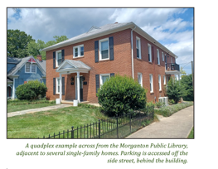
To encourage adoption of these recommendations, WPCOG staff met personally with each of their communities to review the Housing Growth Toolkit and advise how their community can make these changes. Throughout the toolkit, WPCOG featured examples of the policy changes that already exist in their communities. Highlighting these examples that are already present in the target communities showed that these proposed changes wouldn’t drastically change the character of neighborhoods.
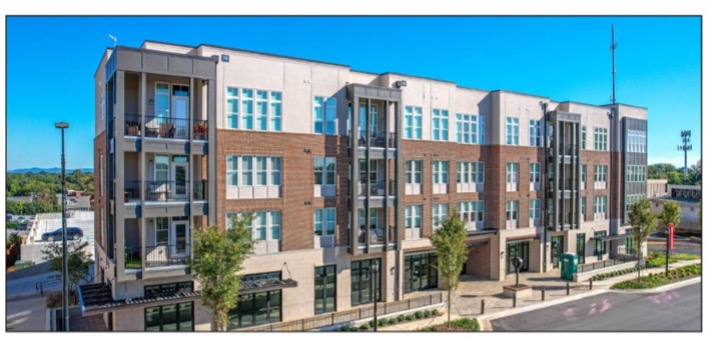
Along with this regional housing planning effort, WPCOG is participating in the Western North Carolina Industrialized Construction Strategy Development Consortium. This project funded through the EDA Tech Hubs Strategy Development Regional Technology and Innovation Hubs program aims to catalyze development and deployment of new construction practices to increase housing availability and affordability, lower overall material costs for construction, reduce environmental impact, and foster economic opportunities for regions.

WPCOG provided the following tips for other regional organizations that are looking to do similar housing planning projects and want to get their communities on-board:

  1. Identify the exact need in communities.

EDDs and Regional Development Organizations (RDOs)  can calculate an exact housing supply need for communities based on growth trends and housing composition assumptions. Communicating this need can help convince communities that may be reticent to accept policy changes. EDDs must situate these code and policy changes as the solution to reaching their regional housing supply target.

  1. Stay practical and grounded in the region with all planning documents.

Using academic planning jargon and being indirect with recommendations can turn communities away from accepting recommendations as they may feel they are not applicable to their communities. WPCOG placed each of their recommendations directly into the context of the communities they serve

  1. Keep your planning process personal.

To get potentially reluctant residents on board with housing planning processes, EDDs and RDOs can frame the planning process as ensuring that resident’s children and grandchildren will be able to afford to grow up and live in a healthy, economically vibrant region. This can be a powerful, persuasive tool for convincing communities and residents to engage with and implement housing planning processes.

Search NADO.org