Scenario Planning Examples

These scenario planning examples were created by NADO Research Foundation staff to demonstrate how an EDD or regional organization could react to specific market conditions or regional contexts. These scenarios are meant to give EDDs inspiration in determining the regional approach that works best in their regions. Many of these recommendations may fall outside the scope of an EDD specifically but can be addressed through coordination with other departments at an RDO. Alongside each response to the scenario, NADO Research Foundation staff have estimated the expected cost or staff time investment needed to respond and an expected time frame: short (3-6 months), medium (6 months-2 years), or long (2 – 5 years).


  • Scenario 1: A region known for its seasonal winter sport tourism is experiencing an influx of outside investment in local housing markets with many formerly affordable housing options being purchased, renovated, and turned into short-term rental investment properties. This development has reduced the affordable housing stock available to residents and the local workforce that hold service-industry jobs at the local ski resorts, restaurants, and other tourism amenities.
    • Regional Organization Response: Regional organizations can foster best practices and info sharing with affected communities about how other cities/counties in the region have responded to their short-term rental property booms. Additionally, within communities, regional organizations can convene stakeholders like landlords, nonprofits, private developers, and other interested parties to guide recommendations and strategies. These organizations can also draft template ordinance language for communities to customize and adopt. Regional organizations can help communities develop GIS mapping tools to understand the scope of the issue in their communities. Finally, regional organizations can serve as a regional liaison for advocacy at the state level.
    • Cost/Staff Investment: Low
    • Staff Assignment: Certified Planner, Local Government Services, Community Development.
    • Time Frame: Short Term
  • Scenario 2: A growing metro region in the Midwest has experienced rapid population growth since the COVID-19 pandemic. Developers in the area prefer to build suburban, planned communities on cheaper land at the periphery of the metro region. Residential sprawl has intensified as the region grows and residents are experiencing worsening traffic delays on arterial streets and highways during commuting hours. Additionally, local governments are forced to use local infrastructure budgets to scale utility systems to meet the new demand further away from existing grid or system nodes. Developers have also expressed concerns about growing project costs of infill development on high-value land within central business districts or in proximity to existing transit options.
    • Regional Organization Response: Regional organizations can work as the regional liaison with developers in addressing some of the concerns communities have with development patterns/project costs. In this regional planner role, regional organizations can collaboratively plan and identify issues that cross jurisdictional boundaries, empowering communities to act collaboratively to address common issues. Through GIS/mapping services staff, regional organizations can help communities identify lots for infill development and source federal or state level funding opportunities to support new construction or redevelopment opportunities while minimizing risks to developers that are committed to improving communities. To further reduce development costs and help developers implement new housing, regional organizations can help cities and counties review impact fees to determine if they are too restrictive. Additionally, regional organizations can help ease construction costs for developers by considering operating an RLF geared toward low-moderate income housing development.
    • Cost/Staff Investment: Medium
    • Staff Assignment: Local Government Services, Community Development, Economic Development
    • Time Frame: Short/Medium Term
  • Scenario 3: A small metro region has experienced slow, consistent levels of growth that have outpaced the rate of new residential housing construction for years. Due to the slow, but steady, growth over the past years, this problem has not been identified and has been able to compound without effective intervention from communities. The largest city in the metro region has a high predominance of detached single-family housing and most residential areas are zoned Residential-1 (R1). The value of these houses has grown as the existing housing supply in the city has dwindled, while new housing construction has been limited due to the city’s restrictive zoning and land use policies. Existing residents in these neighborhoods have expressed concerns about new infill development and have successfully stopped new housing development projects in the past. These factors have priced out many residents from homeownership, causing many of them to move away for more accessible housing opportunities.
    • Regional Organization Response: Regional organizations can serve as the lead organization for a community housing collaboration that can identify potential stakeholders and developers that can work to meet unmet housing needs, serve as a public forum to address both existing residents’ and developers’ concerns, and streamline housing processes at multiple local governments at the same time. In this role, regional organizations can serve as the lead planner, completing both a regional housing plan with specific, actionable, and measurable goals that individual communities can use as benchmarks for addressing housing issues in their jurisdictions.
    • Cost/Staff Investment: Medium/High
    • Staff Assignment: Certified Planner, Local Government Services, Community Development
    • Time Frame: Medium/Long Term 
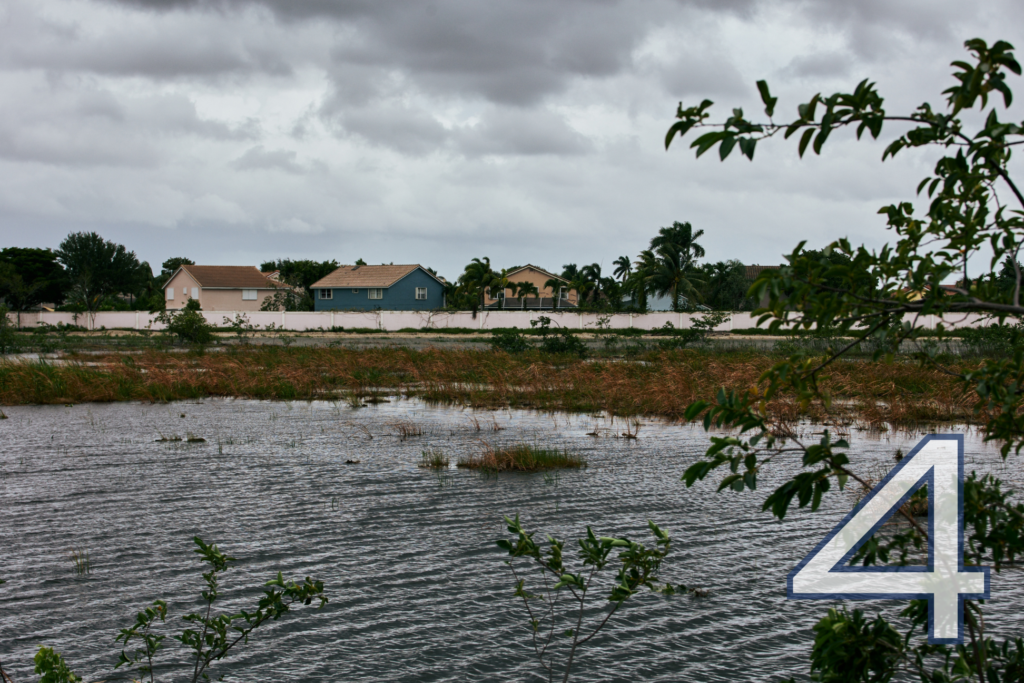
  • Scenario 4: A coastal region on the Gulf of Mexico has a high number of residential areas that are impacted by increasingly common hurricanes and severe flooding events due to climate change. Residents in these areas have lived in their homes for decades and are unlikely to willingly move to less hazard-prone areas without compensation. The regional development organization has been tasked by local communities with developing strategies for reducing the risks posed by hazardous climatic events.
    • Regional Organization Response: Regional organizations can coordinate with local governments and state and federal emergency management agencies to identify specific properties that are most at risk of natural hazards. From there, the regional organization can serve as the regional hazard mitigation and emergency management leader, as a point-of-contact for FEMA, and a clearinghouse for projects meant to reduce the risk to homeowners in flood-prone areas and coordinate property buy-outs in cases where the risks cannot be feasibly reduced.
    • Cost/Staff Investment: Medium
    • Staff Assignment: Hazard Mitigation/Emergency Management staff, Homeland Security, Community Development
    • Time Frame: Medium Term
  • Scenario 5: A predominantly rural region in the South is noticing higher eviction rates, higher participation rates in local homeless service provider programs, and reports of increasing rent prices throughout their region. Through their CEDS process, the region learns that residents are experiencing tepid wage growth year-over-year while having rent prices rise to unsustainable levels, causing evictions and higher rates of housing insecurity.
    • Regional Organization Response: Regional organizations can work with local Workforce Development Boards to ensure that residents’ training and career opportunities are congruent with the needs of local companies to boost regional wage growth and career advancement. Regional organizations can also use creative funding mechanisms to make development more attractive to outside developers. Landbanks and RLFs geared toward developing low-moderate income housing can start to provide rehabilitated and affordable housing options to residents. Additionally, regional organizations can work through Area Agencies on Aging, homeless service providers in their area, and anti-poverty groups to coordinate a regional response to homelessness and the development of transitional and supportive housing options.
    • Cost/Staff Investment: High
    • Staff Assignment: Community Development, Revolving Loan Fund, Area Agency on Aging, Economic Development, Workforce Development
    • Time Frame: Long Term

Search NADO.org