Wealth Creation and Food Systems
Food is personal. Everyone eats, because food provides nutrients essential for our bodies. Food is also a great unifier, connecting people from different backgrounds and experiences. Mealtimes are an important opportunity for building social capital. Access to food is also a key element of quality of life. Food systems build upon the wealth in a region and create more wealth.
Wealth creation is an approach to economic development that connects a region’s assets to market demand in ways that builds rooted wealth for local people, places, and firms. The wealth creation framework is focused on three key principles:
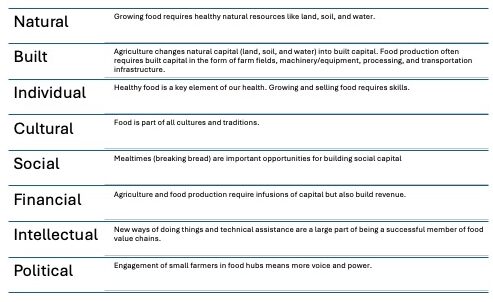
Local and regional food systems are often focused on these same principles: building wealth, keeping wealth local, and building livelihoods. Below are some ways that food systems use or impact a variety of assets.
Wealth creation is a demand-driven approach to building economic opportunities. Rather than a “build it and they will come” approach, wealth creation is about understanding market demand before deciding if and how to connect a region’s assets to it.
A demand opportunity with solid wealth-building potential:
There are 3 broad types of demand:
Another key tool of the wealth creation framework is the use of value chain mapping, bringing together all the partners from supply to demand in pursuit of a specific market opportunity. Because we are accustomed to thinking about supply chains for food and how food gets from producers to consumers, food is often the easiest type of value chain to understand. It is also fairly linear compared to other market sectors, like recreation and tourism, which look more like networks or webs.
Value Chain Map – Tomato Soup

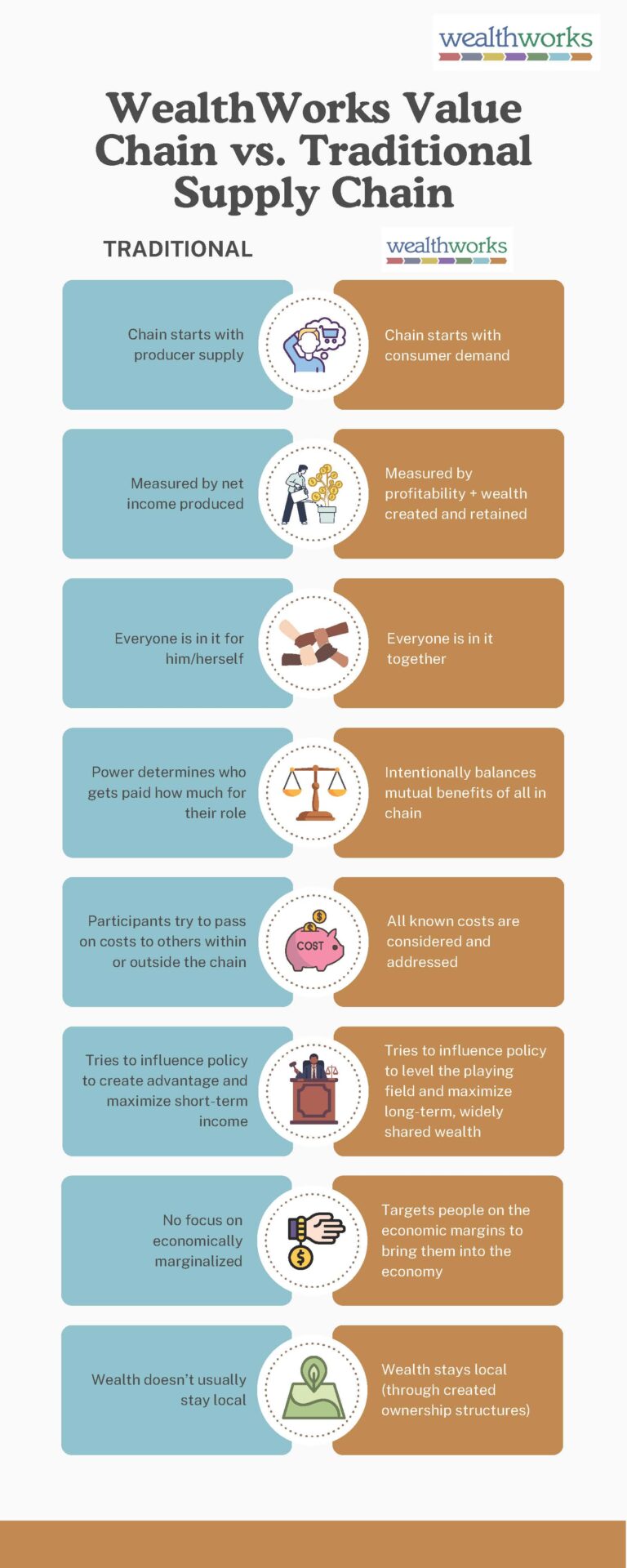
How are value chains different from traditional supply chains?
Supply chains push product to market. This means they only receive market intelligence after they have invested in producing the product or service. Wealth creation value chains produce a range of values in response to market demand. They are intentionally inclusive and managed to create multiple forms of wealth that stick for those who have been excluded from the mainstream economy.
Identifying Opportunities in Food Systems
Part of mapping value chains is identifying gaps, bottlenecks and underutilized opportunities – functions and partners that may be missing and preventing the value chain from operating at its fullest potential. Much of food system development is about identifying these same missing pieces and filling those gaps through entrepreneurship and/or investment in infrastructure or skill development.