Case Study: EDD as Facilitator of Food Hub Development in Southern Virginia

Ann Taylor Wright lives on a large farm, “raising every type of animal you can imagine for direct marketing.” She was selling her meat through the local South Hill farmers market, but the profit margins were too tight. She realized she needed a commercial kitchen to give her the capability of adding value to her meat through further processing. Vendors at the farmers market would offer leftover produce to feed her pigs; she explained that they were losing money and could consider leftover produce as an ingredient for value-added products, like soup. A commercial kitchen would provide opportunities for all these producers to create value-added products.
Southside Planning District Commission (PDC) is an Economic Development District (EDD) serving 14 counties in south central Virginia. Deborah Gosney is the Executive Director of Southside PDC and was a frequent visitor to the farmers market; Ann would tell her about the need for a food hub, which would be a great community project, in an area with a variety of vacant underutilized buildings.
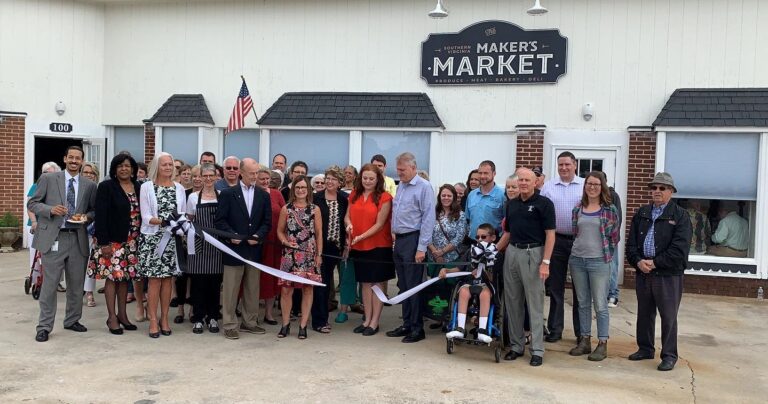
Through this work of developing a food hub, Ann built her own skills in grant writing and project management by learning from Deborah and Southside PDC staff. Together, they were able to secure almost $1 million in grant funding to establish, revitalize and outfit the Southern Virginia Food Hub & Makers Market. Southside PDC was able to use grant funds to renovate and outfit an empty corner building in downtown South Hill to host the new food hub and market space; the food hub building is town-owned and located next to a recently revitalized historic theater.
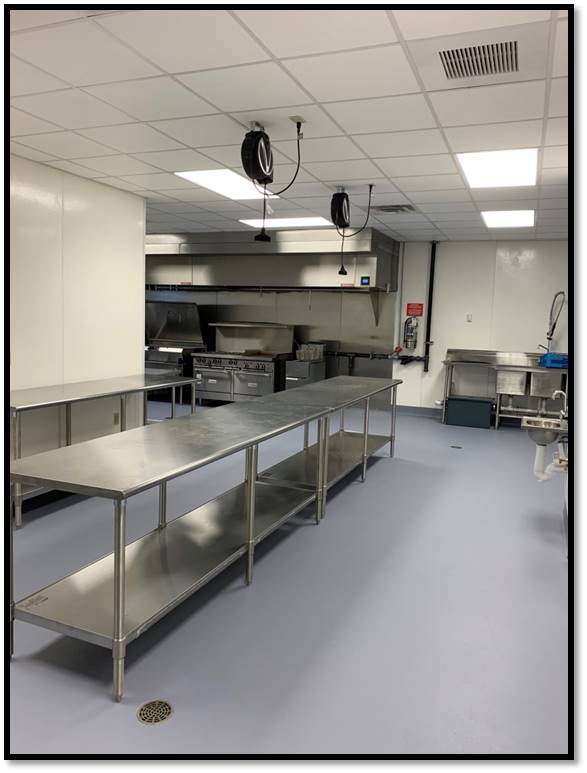
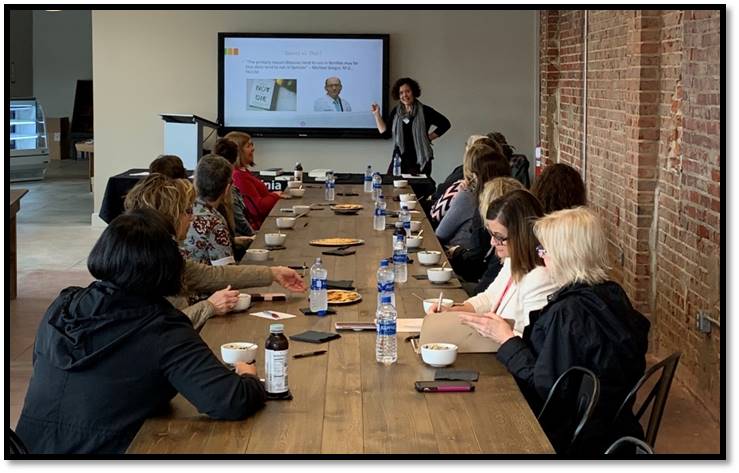
The Southern Virginia Food Hub & Makers Market space is now home to community classes around healthy eating and cooking, as well as those targeted to food-related businesses. The 4H youth in the Mecklenburg County Public Schools can use the kitchen to do community classes for kids. The space offers a community room for classes, the retail grocery section, and a commercial kitchen with walk in freezers, coolers, ovens, stoves, and other kitchen equipment people can use to support their businesses.
While sourcing the initial grant funding was a big win for Southside PDC and local producers, operating expenses and cash flow problems at the food hub became an issue. Ann and Deborah learned that a public-private partnership is more likely to make a food hub financially feasible. Ann and Deborah approached a local butcher shop owner to see if they were interested in being part of a public-private partnership to operate the food hub. In March 2024, Farmhouse Butchery took possession of the Southern Virginia Food Hub & Makers Market facility in South Hill. Farmhouse Butchery specializes in local, farm-raised beef, pork, poultry, and fresh seafood. Owners Zach and Victoria Harris operate Harris Farm Grown in conjunction with Farmhouse Butchery to provide top-quality black angus cattle raised on organic pastureland to their customers. Being co-located with the hub is beneficial for both parties, as the Harris’ can offer a variety of items along with their meat products, making it a one-stop shop for locally produced food items. At the South Hill location, Farmhouse Butchery will offer specialty items, continued educational classes in the existing classroom, producers’ use of the commercial kitchen, and continued partnerships with local farmers to provide fresh meats, produce, and products grown or made in Southern Virginia and North Carolina.
The soft opening occurred in Spring 2022, and the facility will have a lunch counter offering sandwiches and take-home meals. To fill out the local produce and products grocery store section of the food hub, Farmhouse is attempting to engage more local meat producers and vegetable growers. Farmhouse will be buying wholesale from local producers and selling the products through the retail grocery store. The commercial kitchen can also be rented out to serve food entrepreneurs interested in wholesaling who need an inspected kitchen to add value to their products. Prior to this, there were no inspected kitchens in the area. The new kitchen has allowed those selling through the farmers market to consider expanding beyond the farmers market. According to Ann, the main mission is “to increase access to local food beyond the four hours on Saturday morning that the farmers market runs. As a farmer and as a consumer, there needed to be more access.”
Southside PDC’s job in all of this was as a facilitator, grant writer, and convenor. Ann came to Deborah with the idea but no experience in grant writing or grant agencies. Southside PDC helped to facilitate the process, worked with the local government to secure their permission to use the building, assisted with grant writing and grant administration, and supported Ann in making it happen. Mostly, the PDC helped to connect the pieces; according to Ann, “I never would have known how to put those pieces together.” The PDC and Ann helped to build the project management team, which included the town, the South Hill Community Development Authority (CDA, the community development arm of the town), Southside PDC, local farmers and producers, and the South Hill farmers market. The project management team dissolved after the rehabilitation of the building was completed, however, the Food Hub now has its own Board of Directors to support its continued success.
The funding included:
Lessons learned: