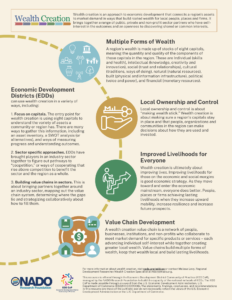
A short primer on the wealth creation principles and an introduction to ways that Economic Development Districts are incorporating wealth creation into their work.
This piece discusses the who, what, where, how and why of wealth creation in the world of economic development and specifically how Economic Development Districts are using it.
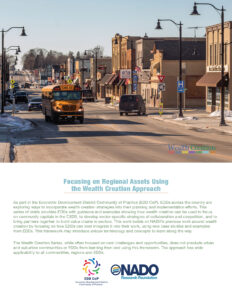
Focusing on Regional Assets Using the Wealth Creation Approach
This report investigates the ways that Economic Development Districts are using the eight capitals to inventory their assets, consider capitals in their CEDS (in their SWOT and evaluation) and in regional marketing and promotion.
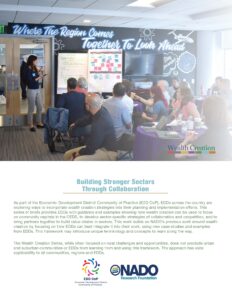
This report investigates how some EDDs are using wealth creation to frame their work in sector-based economic development, helping to develop and encourage partnerships to overcome mutual challenges, including barriers to resilience and workforce development.
Pathways to Opportunity: Connecting Assets to Market Demand Through Value Chains
This Wealth Creation Series piece, Pathways to Opportunity: Connecting Assets to Market Demand Through Value Chains, provides background on value chains, including characteristics, key partners and value propositions, while also showcasing a value chain in west central Missouri devoted to gravel biking.
Wealth creation can be either a targeted approach or embedded across all projects and decisions within an organization. This resource outlines key areas, including regional planning, value chain development, organizational and strategic planning, and project/program evaluation, and provides practical ideas for applying wealth creation principles in each. It serves as a guide to help regions operationalize wealth-focused strategies in their work.
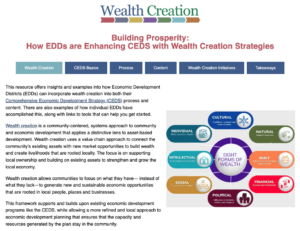
Building Prosperity: How EDDs are Enhancing CEDS with Wealth Creation Strategies
This resource offers insights and examples into how Economic Development Districts (EDDs) can incorporate wealth creation into both their Comprehensive Economic Development Strategy (CEDS) process and content. There are also examples of how individual EDDs have accomplished this, along with links to tools that can help you get started.
Keeping Wealth Close to Home: How Economic Development Districts Can Promote Local Prosperity
One of the key principles of wealth creation is keeping wealth local through structures of local or regional ownership and control. This report explores mechanisms for keeping wealth local and examples of places where they’re being used.
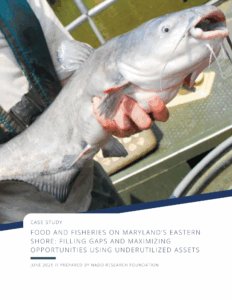
Food and Fisheries on Maryland’s Eastern Shore: Filling Gaps and Maximizing Opportunities Using Underutilized Assets
Underutilized assets are regional resources that haven’t been fully tapped or activated for economic benefit. This case study highlights how the Mid-Shore Regional Council, through its nonprofit Shore Gourmet, identified gaps in the regional food system and responded with creative, targeted solutions to strengthen the region’s economy.
Building Healthier Rural Communities: Economic Development Districts Address Social Determinants of Health
This report explores the social determinants of health and provides examples of how Economic Development Districts (EDDs) are addressing these factors in their regions through the CEDS, and in areas such as workforce development and job creation, infrastructure, food security, health and prosperity, disaster resilience and public health preparedness, leveraging federal and other sources of funding, data-driven decision-making, and fostering public-private partnerships. It also includes a short case study of how the Land of Sky Regional Council, an EDD serving Western North Carolina, supports individuals seeking to improve their health outcomes.
Tip Sheet: How to Map a Wealth Creation Value Chain
This tip sheet is meant for organizations interested in mapping out value chains around specific market opportunities. Value chain mapping offers a way to map out the functions necessary to moving products/services from supply to demand, create a visual baseline of existing partners, and identify gaps, bottlenecks and/or underutilized resources that may be brought into productive use.
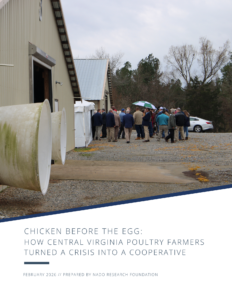
Chicken Before the Egg: How Central Virginia Poultry Farmers Turned a Crisis into a Cooperative
In March 2023, Tyson Foods announced the closure of its Glen Allen, Virginia facility, leaving hundreds of local poultry growers and their 265 farmer‑owned production houses without long‑standing contracts. This case study examines how a broad coalition of regional partners, including the Commonwealth Regional Council (CRC), the area’s Economic Development District (EDD), mobilized to respond and chart a path forward.