
The Northwest Pennsylvania Housing Development and Planning Toolkit’s goal is to complete a comprehensive assessment of housing needs in urban, suburban, and rural communities in the region. This assessment also includes an analysis of demographic trends, housing market demands, affordability challenges, and priority areas for intervention. The development of the toolkit also seeks various resources, tools, and templates to support housing development investment and implementation strategies- including model ordinances, zoning strategies, financing options, land use tools, and community engagement strategies. Moreover, the toolkit includes case studies and examples of successful housing initiatives from other communities accompanied by analysis and recommendations for adaptation and replication.
The plan came out of a Steering Committee formed through the 2022-2026 CEDS. One of the major weaknesses pointed out in the CEDS was that the region’s housing market is aging, lacking variety in home types, and supply is slow to keep up with ever growing demand. As mentioned in the CEDS, strategies for addressing these weaknesses include expanding affordable housing and re-investment in housing stock by examining barriers and costs to land development and encouraging national best practices. The plan seeks to address these weaknesses by making a case for stimulating new construction and renovation while also incentivizing increased variety of alternative types of housing options.
Addressing the housing needs exacerbated by coal-related job losses requires a multifaceted approach that integrates housing development strategies, economic diversification efforts, workforce development initiatives, and community revitalization programs. Collaborative efforts involving government agencies, non-profit organizations, private sector partners, and community stakeholders are essential to effectively address these challenges and promote inclusive and sustainable development in the region.
The toolkit provides strategies for creating affordable housing options in both urban and rural areas, which is a critical element of community infrastructure. Access to affordable housing is essential for fostering long-term economic stability, as it supports the overall functioning of local economies and promotes the sustainable growth of communities. By addressing housing challenges, the toolkit aids in developing communities that are more economically viable and attractive for investment.
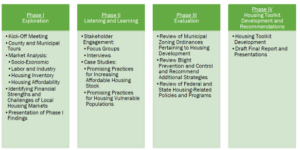
The project was broken down into four phases, activities done by consulting group 4Ward Planning, Inc.:
The Housing Development and Planning Toolkit is projected to be finished by December of 2025. Some of the goals of this project is to provide evidence supporting how housing is an essential aspect of economic development. Access to affordable housing is imperative for long-term economic stability since it supports the functioning of local economies and promotes sustainable growth of communities. The toolkit aims to act as a guide in developing communities that are more economically viable and attractive for investment by providing best practices and strategies to implement affordable, well-planned housing options which will in turn attract businesses and people to the region. With investment in this type of infrastructure in a community, sustainable economic growth can occur through investments, boosting property values, and increased local tax revenues.