Telling Our Stories: Highlights from the 2026 Afternoon with the Districts

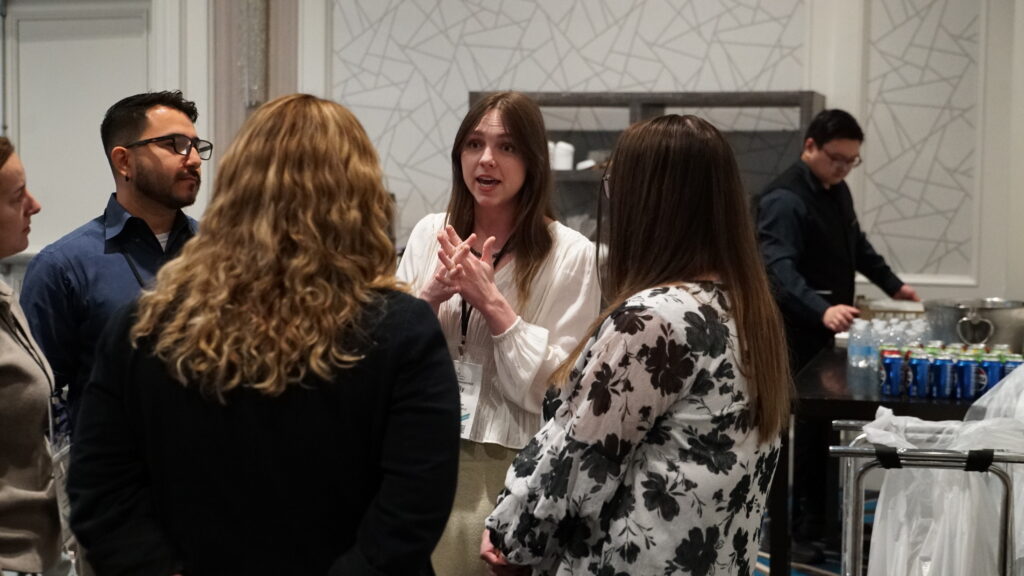
In a rapidly changing economic landscape, Economic Development Districts (EDDs) and other Regional Development Organizations (RDOs) are being called on not just to deliver results, but to clearly demonstrate their value to the communities they serve. That’s why this year’s Afternoon with the Districts, held immediately following the 2026 NADO & DDAA Washington Conference as part of NADO’s Economic Development District Community of Practice (EDD CoP), offered an opportunity for EDD leaders to step back, reflect, and strengthen their storytelling techniques and approaches. Nearly 50 participants gathered to explore new ways to communicate impact, share successes, and elevate the essential role EDDs play nationwide.

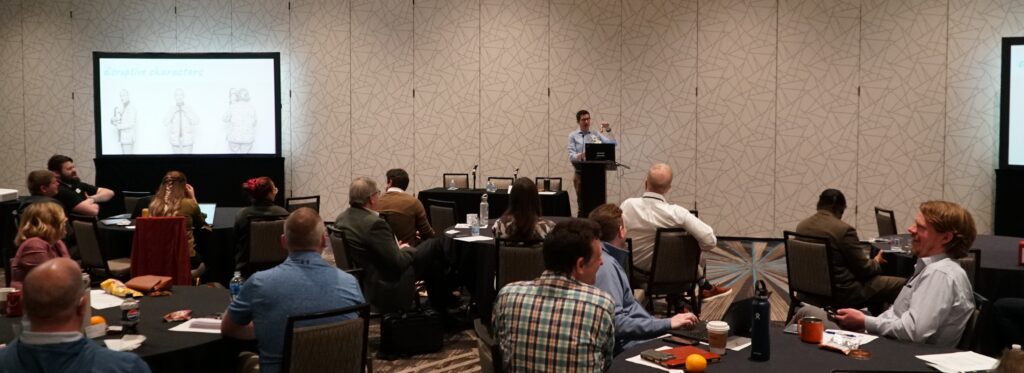
Following a “Rose-Bud-Thorn” networking exercise to get the crowd moving and updates from staff at the U.S. Economic Development Administration, Georgetown University professor John D. Trybus, Ph.D delivered the event keynote, entitled “Strategic Storytelling for Influence and Engagement.”  Professor Trybus currently leads and manages Georgetown University’s Center for Social Impact Communication, but identifies as a “story-scientist” and previously gained recognition for serving as personal advisor to United Nations Messenger of Peace, Dr. Jane Goodall.  

Dr. Trybus shared that “stories are the currency of human life because they help us to create and share meaning together.”  The importance of stories stems from the theory that humans are natural storytellers with people using them in approximately 65% of their interactions.  He noted that we can engage with stories in different roles, including as storytellers, story-listeners, and story-conveners. Stories can be powerful because of their unique ability to describe a series of events while simultaneously conveying greater meaning, but only if we tell them the right way.  Professor Trybus discussed how good stories are created and shared, breaking down different story types, like visionary stories, and offering a story framework that includes six essential building blocks.  These include character, trajectory, authenticity, action-oriented emotions, a hook, and the storyteller themselves. 
Finally, Dr. Trybus encouraged the group not only to practice good storytelling but also to become attentive story listeners. In a professional setting, this means showing genuine interest in the stories of a person or community to build connection and shared understanding. Listening should go beyond simply hearing what a person says.  We should strive to be relational listeners who aim to understand the emotions and meaning behind a story or message.  

Economic development practitioners know the importance of community engagement and collaboration; that much isn’t new. Professor Trybus’ keynote added to the conversation by expanding a tool for collaborating with community members and sharing information. In the next session, attendees saw examples of storytelling from the field, hearing how different methods like in-person convenings, videos, and interactive web platforms can utilize the skills Dr. Trybus described.  

Moderated by NADO Research and Writing Fellow London Weier, the panel featured Scott Warner, Executive Director of the Mid-Shore Regional Council (MSRC) in Easton, Maryland; Eric Wright, Director of Planning and Development at the East Alabama Regional Planning and Development Commission (EARPDC) in Anniston, Alabama; and a recorded presentation from Jen Gregory, Executive Director of the Southern Tier 8 Regional Board in Binghamton, New York. 

The session began with a video produced by NADO and the National Association of Regional Councils through the EDD CoP emphasizing MSRC’s work supporting economic growth across Maryland’s Eastern Shore. The video offered attendees an inside look at the district and the alliances that power its work. Following this, Warner delved into the success he has had with collaboration at MSRC by working closely with county governments, businesses, elected officials, minority representatives, and resource-based industries to bring hundreds of jobs and millions of dollars in investment to the region. Warner emphasized the role of data-driven storytelling, highlighting the Delmarva Index, a GIS tool developed with several regional partners that helps leaders visualize the broader impact of targeted investments and strengthens grant applications. He also discussed the Eastern Shore Entrepreneurship Center, a nonprofit initiative developed by the MSRC that provides entrepreneurs and small businesses with access to capital and technical support.  Finally, Warner shared how MSRC communicates its Return on Investment and CEDS projects through a short 2-pager (examples here and here) that is shared with its board, elected officials, funders, and the public.  
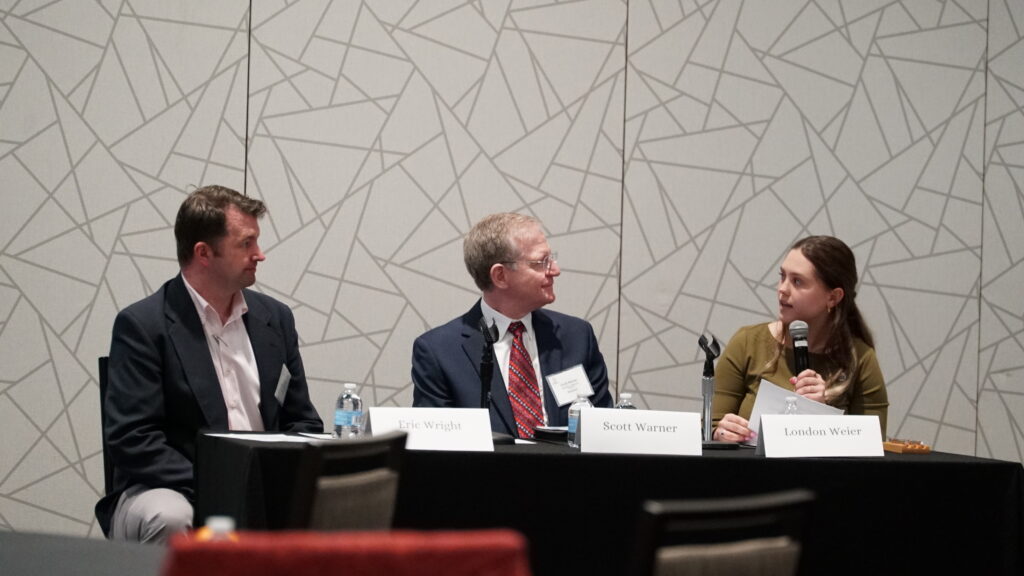
Wright’s presentation featured how his work at EARPDC has centered on relationship building with local leaders, particularly during a period of political transition across Alabama. A recent change in state law aligned most mayoral elections to November 2025, resulting in 25 newly elected mayors across EARPDC’s 10-county, 54-municipality region, many who were unfamiliar with the planning commission or the CEDS process. To maintain momentum on regional projects, Wright and his team launched a proactive outreach strategy, identifying incoming officials early and conducting one-on-one, in-person visits with newly elected mayors to better understand local priorities before connecting mayors with relevant EARPDC resources. These early meetings helped establish trust and made later requests easier. 

To further support engagement, the commission introduced more accessible communication tools, including an interactive CEDS dashboard and a digital Story Map version of its annual report. Wright also highlighted the Partners in Progress convenings, which connected new mayors with state and federal partners, funding opportunities, and peers at the start of their terms, reinforcing EARPDC’s role as a hub for regional collaboration. Early results were strong: 18 of the 25 new mayors participated, and eight grant funded projects entered the pipeline. Wright emphasized that anticipating leadership changes, building relationships early, and simplifying complex planning tools are key to sustaining momentum during times of change. 

Jen Gregory’s recorded presentation showcased SO-Tier.com, an interactive website developed by Southern Tier 8. The site, a 2025 NADO Impact Award recipient, uses GIS mapping and data visualization to highlight public investments, community assets, and business opportunities across the Southern Tier region of New York. Gregory illustrated how the platform brings together information on regional industries, workforce development, Opportunity Zones, and quality-of-life assets across eight counties and nearly 580,000 residents. By translating complex data into an engaging, easy to understand format, SO-Tier.com helps businesses and policymakers better understand the region’s economic potential. 
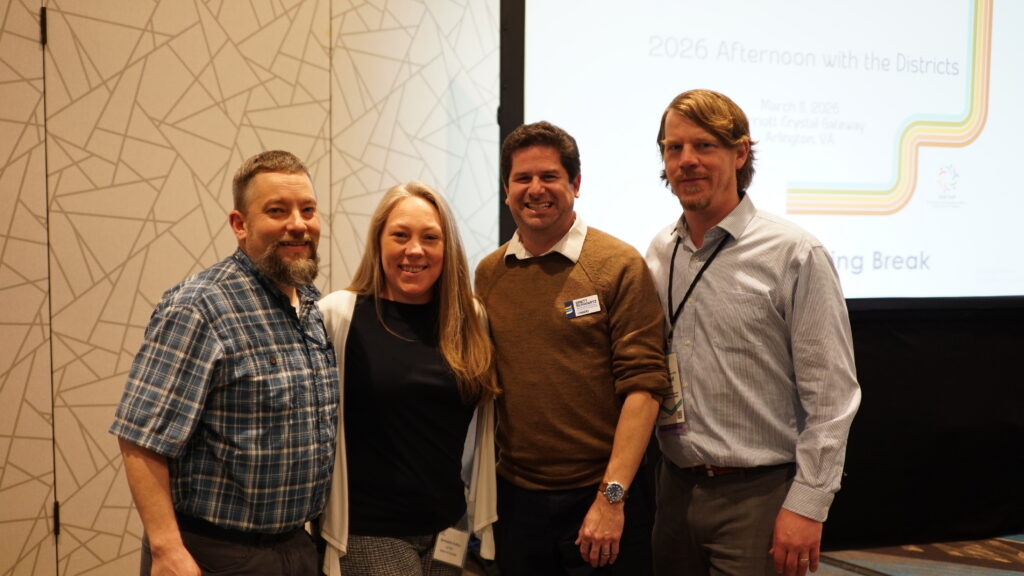
The day wrapped up with small group discussions that gave participants space to reflect on what they learned, ask questions, and identify concrete next steps they plan to bring back to their regions.  These conversations underscored the value of shared learning and the collective commitment to elevating the work of EDDs nationwide.  We’re excited to carry this momentum into next year, when we celebrate the 10th anniversary of Afternoon with the Districts. See you there!

Thanks to NADO Fellows London Weier & Ethan Simon for their contributions to this event recap and Matthew Leder for the photographs.  

This event was offered through the Economic Development District Community of Practice (EDD CoP), made possible through an award from the U.S. Economic Development Administration, U.S. Department of Commerce (ED22HDQ3070106). The statements, findings, conclusions, and recommendations are those of the participants and trainers and do not necessarily reflect the views of the U.S. Economic Development Administration or the U.S. Department of Commerce.

Contact Ethan Simon

Ethan Simon began as a Research Fellow at NADO in January 2025 after earning his bachelor’s degree in Public Policy from the University of Maryland, College Park, with minors in Law and Society and Geographic Information Science. During and after his undergraduate studies, Ethan built experience across state government, transportation advocacy, and nonprofit policy work, including positions with the Maryland General Assembly, the Government Affairs Department of the Southeastern Pennsylvania Transportation Authority (SEPTA), and as a Government Relations and Advocacy Intern for the National Council of Jewish Women. Ethan currently serves as Chair of Government Affairs for the SEPTA Youth Advisory Council, where he leads advocacy efforts to expand public transportation funding and strengthen transit planning throughout the Philadelphia region.

At NADO, he supports rural energy planning initiatives by contributing research to the Rural Energy Academy and assisting with broader programs focused on rural energy development and policy impacts on rural communities.

Now residing in Washington, D.C., Ethan enjoys playing basketball and football in his free time, as well as traveling. He is interested in U.S. history, sports, and geography, is a die-hard Buffalo Bills fan, and hopes to one day compete on Jeopardy.

Juliette Wilder is the Manager of Government Relations for the National Association of Development Organizations (NADO), where she supports congressional and executive branch outreach, coalition building, and advocacy efforts on behalf of more than 500 regional development organizations (RDOs) nationwide.

Prior to joining NADO, she was a Senior Policy Associate at Boundary Stone Partners, where she specialized in clean energy policy analysis, federal funding navigation, and legislative advocacy. In this role, Juliette coordinated with the Department of Energy on multi-million-dollar clean energy projects, spearheaded congressional and executive branch initiatives, and built partnerships to advance innovation in the energy transition.

She holds a Master’s degree in Global Environmental Policy from American University and a Bachelor’s in International Studies. Her academic research focused on energy equity and the Justice40 Initiative.

When not working, Juliette can be found community gardening, bouldering, or hiking.

Contact Juliette Wilder

Contact London Weier

Mirielle Burgoyne serves as the Deputy Executive Director of the National Association of Development Organizations (NADO), advocating on behalf of hundreds of Regional Development Organizations across the country that facilitate community and economic development on behalf of thousands of cities, counties, towns, and villages. In this role, she oversees the association’s advocacy efforts and the development of NADO’s policy priorities and programs. She has more than a decade of experience in the community and economic development field, and throughout her career has focused on improving connectivity between government officials and regional stakeholders to enhance the outcomes of economic development initiatives.
 
Before coming to NADO, Mirielle conducted research on economic development programs in her role at the Pew Charitable Trusts, where she advocated for policy solutions to make those programs more effective. Prior to that, she facilitated interagency initiatives while working for the Delta Regional Authority, where she created and administered programs designed to spur economic diversification, disaster resilience, workforce development, and improved health outcomes in the rural Delta region. Mirielle holds a BA in Government and Politics from the University of Maryland College Park.

Contact Michael Matthews

Michael Matthews is the Director of Government Relations for the National Association of Development Organizations (NADO), where he leads congressional and executive branch outreach, coalition building, and advocacy efforts on behalf of more than 500 regional development organizations (RDOs) nationwide.


With over a decade of experience, Michael combines policy expertise with political acumen to advance federal policies that promote equitable community development, economic competitiveness, rural growth, economic mobility, and quality of place. Before joining NADO, he served as the Legislative Director for Community, Economic & Workforce Development at the National Association of Counties (NACo), collaborating with county officials to shape policies affecting local governments in areas such as housing, community and economic development, public works, and workforce initiatives.


Earlier in his career, Michael held various policy positions at the Association for Career and Technical Education (ACTE), Office of Congressman Anthony G. Brown (D-Md.), and contributed to several political campaigns across the Washington, D.C. metro area.
Michael holds a bachelor’s degree in political science from Salisbury University and a master’s degree in public administration from Wilmington University. A native of Delaware, he now resides in Lake Ridge, Virginia, with his wife and daughter.

Contact Ryan Collins

Ryan Collins joined NADO in 2024. Having grown up in rural communities, he is dedicated to ensuring these areas thrive and prosper nationwide. Ryan has always identified as a helper and has focused his career on serving others in both the public and private sectors.
 
In his role at NADO Ryan works in several capacities including GIS Mapping, data analysis, along with transportation and economic development technical assistance with a focus on building resilient communities.
 
Before joining NADO, Ryan worked as a Policy Manager with the National Digital Inclusion Alliance. There he focused on Federal Policy issues and making them more accessible to members. Ryan also worked with NADO-member organization, Buckeye Hills Regional Council (BHRC). There he served as a Broadband Coordinator and then as a Program Manager leading Ohio’s Southeast Regional Digital Inclusion Alliance, managing BHRC’s State and Federal Appalachian Regional Commission programs, and working in several other programs.
 
In his free time, Ryan enjoys reading, playing Dungeons and Dragons and video games, lifting weights, building models, hiking, going on adventures with his partner, and spending time with his children (his cats Saturn and Cosmo).
Haley Schultheis joined NADO in November 2024, bringing experience in association management and nonprofit development. She earned her master’s in Community Development from the University of Detroit Mercy in 2022, focusing on human and organizational development. Her academic and professional path has been guided by interests in systems thinking, capacity building, and human behavior.
 
At NADO, Haley works on research, workshop facilitation, and project management for local and regional transportation initiatives. She helps design collaborative processes, supports strategic planning, and connects technical analysis with stakeholder engagement to strengthen access through transportation and economic development.
 
Outside of work, Haley loves drawing, going for walks, and enjoying good food. You can check out her cartoon series on Instagram!
Dan Deutsch joined the NADO team as a Research Fellow in 2024. With over a decade of experience in nonprofit communications with particular emphasis on arts and culture institutions, and over 25 years of participating in the performing arts, his interests sit at the crux of placemaking/placekeeping, arts and culture, community engagement, and economic development. Dan holds a dual bachelor’s in communications & culture and theatre arts, and a master’s in professional communications from Clark University.
 
Before joining NADO, Dan had just graduated with a master’s in regional planning from UMass Amherst after living and working in the Greater Hartford region as a communications professional. Dan resides in Washington D.C., where he enjoys trying new restaurants, recreational photography, and staying involved in the local music scene as both a musician and supporter.
Olivia holds a bachelor’s degree in urban studies from the University of Pennsylvania and is currently pursuing her master’s in public administration at Columbia University’s School of International and Public Affairs.
 
Prior to beginning her graduate studies, Olivia worked for the Commonwealth of Massachusetts’ Executive Office for Administration and Finance. She first joined the office as a member of the state’s budget team, where she worked on housing, economic development, and education finance, and later served as the agency’s Chief Financial Officer. She relocated to Boston from Washington D.C., where she had worked on legal and regulatory research as an analyst for Mintz Levin and its consulting affiliate M.L. Strategies.
 
Olivia has lived in each of the cities featured in the National Treasure movie and is currently located in New York City, where she spends her time running in Central Park and cleaning up things her cat Franklin knocks over.

Contact Haley Schultheis

Contact Daniel Deutsch

Contact Olivia Graham

Contact Joe D'Antonio

Andrew Coker joined the NADO team in March of 2023 as a Regional Development Researcher after spending two and a half years as the Regional Economic Resiliency Coordinator at NADO-member organization West Central Arkansas Planning and Development District. 

Now serving at NADO as a Program Manager, Andrew conducts research on the newest economic and community development best practices from Economic Development Districts across the country. He helps produce easily digestible information on complex regional issues through case studies, tip sheets, and research reports. Andrew also hosts training and professional development opportunities including conference sessions and virtual webinars for member regional development organizations.

Andrew holds a bachelor’s degree from Hendrix College and a master’s degree from the University of Arkansas Clinton School of Public Service. He is one of NADO’s three Missouri-based team members and enjoys reading and training for his next triathlon.

As Director of Programs, Jack Morgan manages the portfolio of NADO’s training, research, capacity-building, and other grant-funded programs and activities of the NADO Research Foundation. Jack previously served as a NADO Senior Program Manager and Associate Director, leading work supporting energy communities and the training programs for Emerging Leaders. 

Jack joined the NADO team in 2022 after seven years with the National Association of Counties (NACo) as a Program and Senior Program Manager. Prior to NACo, Jack was a Policy Analyst for Friends of Southwest Virginia and interned for Mount Rogers Planning District Commission (VA). Jack holds a bachelor’s in geography from Emory & Henry College and a master’s in geography from Appalachian State University.

Jack is certified by the American Institute of Certified Planners (AICP) and is a member of the American Planning Association (APA) Regional & Intergovernmental Planning Division. He also serves on the Emory & Henry College Alumni Board.

Taking road trips, reading non-fiction, and indulging in top-notch barbecue and coffee round out Jack’s days. He loves maps, mountains, and of course, all things sports.

Kar’ron Grant joined the NADO team in 2023 as Administrative Specialist and is the first face (or voice) you’ll see or hear when reaching out to NADO. As Administrative Specialist, Kar’ron manages our database and coordinates NADO event operations. He ensures members’ needs are met, contact information stays current, and NADO’s office is running efficiently.

Kar’ron came to NADO after four years in the classroom teaching at The New Century School and Old Mill Middle North where he received the Patriot of the Year award. He attended Towson University and the University of Maryland Global Campus and holds a bachelor’s in international studies and humanities.

Visiting art galleries and museums, playing basketball and bowling, and taking in movies and music are some of Kar’ron’s interests and hobbies.

Deputy Executive Director Laurie Thompson has been with NADO for 25 years. Laurie helps keep the NADO and NADO Research Foundation wheels turning through management of the daily operations of the Research Foundation, securing financial resources and overseeing grants management, and helping execute NADO’s Annual Training Conference each year.

Laurie holds a bachelor’s in public affairs and government from Mount Vernon College and a master’s in health services administration from The George Washington University. Prior to NADO, Laurie spent time as a Field Specialist and an Eagle Staff Fund Director at First Nations Development Institute.

When she’s taking a rare reprieve from her NADO work, Laurie enjoys traveling domestically and internationally to visit friends and family.

Jamie McCormick joined the NADO team as a Policy Fellow in 2019 and now serves as a Senior Manager of Member Services. In this role, she supports NADO’s engagement with its membership, helping ensure members stay connected, informed, and supported. She assists with programs, communications, and events that strengthen relationships across the organization’s network.

Outside of work, Jamie volunteers with the VOLO Kids Foundation and fundraises for YMCA youth programs. She’s also known as NADO’s resident baker—keeping the D.C. office well-supplied with homemade treats—and enjoys traveling, rock climbing, hiking in the Northeast, and walking her dog, Mookie, around the city. Jamie holds dual bachelor’s degrees in Political Science and International Relations from the State University of New York at Geneseo and a master’s in International Development Studies from The George Washington University.

Brett Schwartz began at NADO in 2012 as a Research Fellow after earning his J.D. from the University of Baltimore School of Law. The following year, he was promoted to Program Manager and has now been leading as an Associate Director since 2018. Brett is responsible for managing NADO’s Economic Development District Community of Practice (EDD CoP), as well as researching and monitoring the latest trends in regional economic development and resilience, including best practices for the Comprehensive Economic Development Strategy (CEDS). With more than a decade of experience on the NADO team, Brett is a dynamic relationship builder helping connect and build capacity among the national network of regional development organizations.

Brett also holds a bachelor’s degree from Georgetown University and a master’s from Trinity College Dublin, as well as a certificate in mediation training. He’s a member of Catalyst Grantmakers of San Diego and Imperial Counties and was a participant in the 2021-22 Field Trips to the Future Cohort.

Brett is one of NADO’s West Coast team members residing in San Diego, CA where he enjoys spending time outdoors, attending concerts and festivals, and soaking up life as a parent of two young children.  

Katie Allison joined the team in 2023 to lead the strategic communication efforts of NADO. Katie creates and develops print and online materials, communicates NADO’s updates to members via weekly emails, and maintains content for nado.org and NADO’s social media channels. She also works with different departments to generate new ideas and strategies to effectively describe and promote the important work NADO is doing for EDDs and RDOs across the country.

An experienced nonprofit communications professional, Katie worked for organizations in western North Carolina for nearly a decade. She holds a bachelor’s in communications from Wingate University where she was a four-year student athlete. 

Senior Program Manager Ciara Ristig has been a member of the NADO team since 2021, and helps with NADO’s EDD Community of Practice, EDD staff capacity building and other grants on a range of subjects, including equity and solar energy. Before NADO, Ciara worked as a Planner for the County of Santa Barbara and an Assistant Project Manager for REM Consult. Ciara holds a bachelor’s in urban studies and French from Bryn Mawr and a master’s in urban studies from Ecole d’Urbanisme de Paris.

When she’s not traveling, you can find her outrigger paddling and serving on the board of the Blue Sky Center in New Cuyama, CA, near her home base of Santa Barbara.

Carrie Kissel has been a member of the NADO team since 2005 and currently serves as Associate Director, Transportation. Carrie holds a bachelor’s in anthropology from Ball State University and a master’s in public anthropology from American University. In her role at NADO, Carrie provides technical assistance and support to rural regions on transportation and economic development issues. She also develops training and peer exchange events on transportation issues and rural wealth creation as an economic development strategy.

Carrie is a member of the Transportation Research Board (TRB) and serves as chair of the TRB Standing Committee on Transportation in Rural Areas.

Reading, gardening, hiking, and kayaking are a few of Carrie’s hobbies.

Melissa Levy has worked at NADO as a Wealth Creation Specialist since February 2023 and is the Principal Consultant at her own firm specializing in wealth-based economic development consulting. With a career spanning nearly 30 years, Melissa brings a breadth of knowledge to her role providing in-depth research, coaching, and training on regional economic resilience, rural wealth creation strategies, and economic development.

Melissa is a North American Food Systems Network trained AgriCluster Resilience and Expansion (ACRE) facilitator and a WealthWorks coach, facilitator, and trainer.

In addition to her professional work, Melissa serves on the Vermont Urban and Community Forestry Council, on the board of the Hinesburg Community Resource Center, and on the Hinesburg Economic Development Committee.

A true outdoorswoman, Melissa enjoys cross country and downhill skiing, paddleboarding, hiking, biking, and kayaking, as well as yoga, and teaching Tai Chi.

Senior Program Manager Krishna Kunapareddy began her role with NADO in February of 2023 after 14 years of service at Boonslick Regional Planning Commission in Missouri. Krishna manages NADO Research Foundation’s Planning and Environmental Linkages and Center for Environmental Excellence projects. In addition to researching and writing, Krishna also conducts virtual workshops on innovative tools and techniques related to transportation planning.

She holds an undergraduate degree from Andhra University and a master’s from JNT University in India, as well as a master’s in city and regional planning from the University of Texas at Arlington. Krishna is also a certified Smart Cities Academy Practitioner and holds the Location Advantage certificate from geographic information system software company ESRI.

In her spare time, Krishna volunteers with Mentors4College helping high schoolers better plan for their post-high school paths.

Krystal De Leon is the Director of Operations at the National Association of Development Organizations (NADO), where she has grown over the past five years through a variety of roles in operations and management. With twenty years of professional experience, Krystal brings a strong foundation in business administration, customer service, and project coordination.
 
In her current role, Krystal leads cross-functional operations and is responsible for managing vendor relationships, administering databases, coordinating grants invoicing, supporting conference logistics, and handling HR functions. She is known for her ability to juggle multiple projects while keeping day-to-day operations running smoothly. She values collaboration, consistency, and thoughtful problem-solving, and is committed to building streamlined systems and supporting initiatives that contribute to NADO’s overall effectiveness.
Krystal is a Certified Meeting Professional (CMP) and holds a bachelor’s degree in psychology from Liberty University.
 
Outside of work, Krystal treasures time with her husband, son, and daughter. Whether exploring local trails or enjoying quiet family moments, she finds joy in the everyday adventures of parenthood.

Bret Allphin joined NADO in April of 2022 bringing with him a wealth of knowledge after a 20-year career with Buckeye Hills Regional Council in Marietta, Ohio. In addition to his bachelor’s in political science and master’s in public affairs, Bret is a licensed Geographical Information Systems Professional (GISP). He is NADO’s go-to team member for all things mapping while also supporting members with transportation and economic development technical assistance services.

An avid sports aficionado and former collegiate athlete, Bret enjoys cheering on his Cincinnati Reds, hitting the trails on his mountain bike, and improving his golf game whenever possible. Bret is an involved community member in Marietta dedicating much of his spare time to serving on local nonprofit boards.

Contact Kar'ron Grant

Applications cannot be saved and returned to at a later time. It is recommended you compile all of your information in advance in a word processor and cut and paste into the application below.

2023 Impact Awards

The primary applicant must be a NADO member. Project partners, both NADO and non-members, can be recognized under "Project Partners" below.

Primary Project Contact:
This person will be the designated point of contact for all future awards-related correspondence.

Organization Address

Project Location (if different from Organization Address)

Executive Director

Additional Organizational Information
Please upload your organization's logo which will be included on the winning project award certificate.

Project Information
This title will be printed on the award certificate for winning projects and in all 2022 NADO Impact Award materials and cannot be changed.

Project Summary & Questions
Please craft clear, thoughtful, and engaging responses to the following questions. Use the following sections to tell us how your project has made an impact, such as its use of creative funding mechanisms, efforts to create efficiencies or reduce costs, unique partnership models, and emphasis on building resilience and/or enhancing your region's quality of life.

For award-winning projects, the information provided below may be used verbatim to inform project descriptions that will be published in the 2023 NADO Impact Awards materials and included on the NADO website.

Please submit at least one photo showing your project in action. Please keep file size to a minimum (<2Mb) and use JPEG format. If uploading multiple files, ZIP files prior to submitting. If you have trouble uploading images they can be directly emailed to Brett Schwartz at [email protected]. Include the project title they correspond to in the subject line of your email.

Note: Submitted photos may be used in NADO Impact Awards materials and in other NADO published materials with credit to your organization. Please also consider submitting photos for NADO's 2023 Photo Contest, which will be held this summer.


CLICK THE LINK BELOW TO SUBMIT THE APPLICATION - PLEASE BE PATIENT! IF YOU DO NOT SEE A CONFIRMATION, YOUR APPLICATION WAS NOT RECEIVED.
Your application is not submitted until you are directed to a confirmation page. If you have any questions or are unsure if your application has been submitted, please contact Brett Schwartz at [email protected]

Contact Melissa Levy

Contact Krishna Kunapareddy

Contact Andrew Coker

Contact Lara Gale

Contact Katie Allison

Contact Jack Morgan

Content Questions Form

Registration Questions Form

Hotel Questions Form

New Speaker Inquiry

Job Listing Inquiry

Joe McKinney serves as Executive Director of the National Association of Development Organizations (NADO). Headquartered in Washington DC, NADO provides advocacy, education, research, and training for the nation’s 500+ regional planning and development organizations.

Joe has more than 30 years of experience having served in city, county, regional, national association, and government management since 1991. He holds a bachelor’s degree in Public Policy Analysis from the University of North Carolina at Chapel Hill and is a candidate for a master’s degree in Public Administration from UNC-Chapel Hill.

McKinney has provided congressional testimony on numerous occasions regarding the importance of regional development organizations in helping shape the nation’s economic growth. He is nationally recognized for promoting innovative solutions in areas such as planning and economic development, workforce development, transportation and transit, and aging services.

Contact Danny Tomares

Contact Dion Thompson-Davoli

Contact Ciara Ristig

Contact Bret Allphin

Contact Brett Schwartz

Contact Carrie Kissel

Contact Scott Brown

Contact Jamie McCormick

Contact Joe McKinney

Contact Krystal De Leon

Contact Brittany Salazar

Contact Laurie Thompson

Contact Mirielle Burgoyne

Search NADO.org