
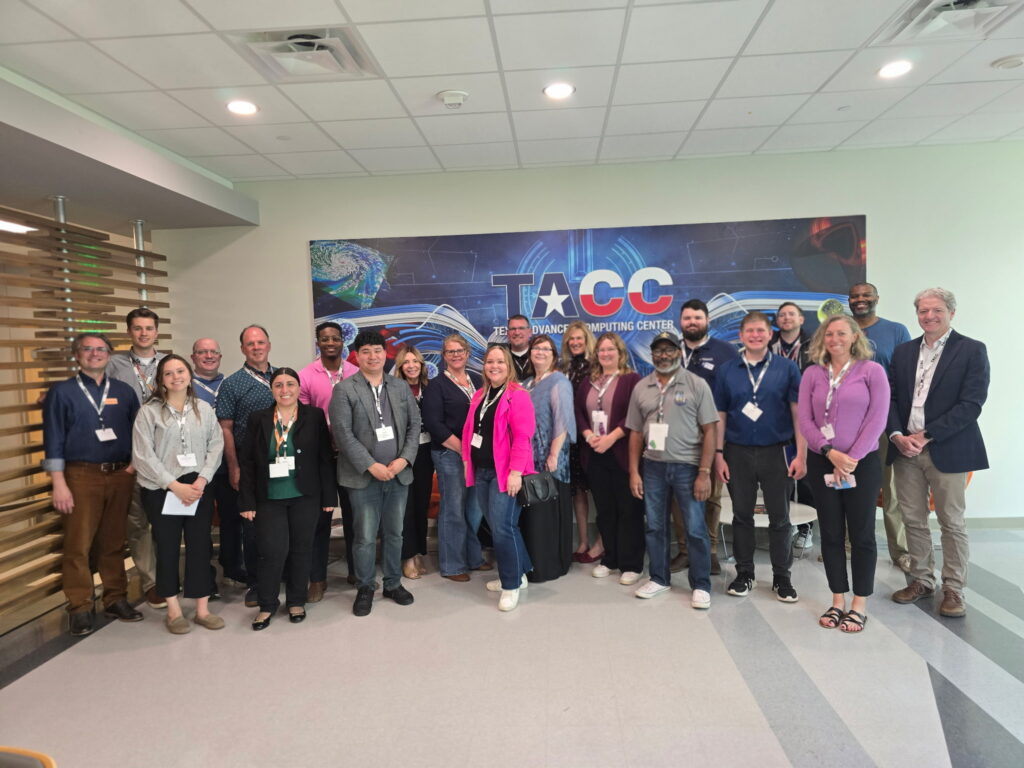
On April 17, 2026, NADO’s Rural Energy Academy (REA) team hosted a post-conference session at the University of Texas JJ Pickle Research Campus following the Southwest Regional Economic Development Association (SWREDA) conference in Austin, TX. Economic Development District (EDD) leaders from Arkansas, Louisiana, New Mexico, Oklahoma, and Texas spent the afternoon hearing from researchers, practitioners, and community leaders on pressing energy topics facing rural communities today before embarking on a tour of the UT Energy Institute data center.
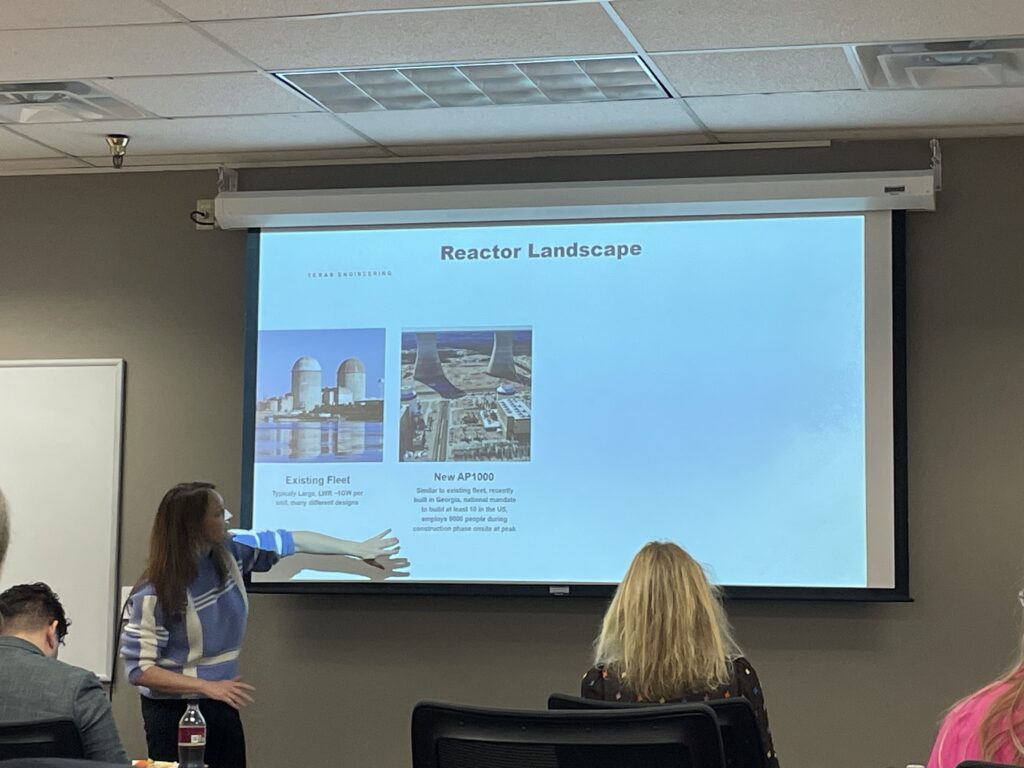
Dani Zigon, Director of Strategic Initiatives for Nuclear Engineering at UT Austin’s Cockrell School of Engineering, opened with an overview of nuclear energy and what communities should be thinking about proactively. She framed the urgency plainly: Texas’s electrical grid needs to effectively double in size within six years just to meet projected data center demand. Advanced nuclear reactors, which have a smaller environmental footprint than solar, wind, and other clean energy alternatives, offer scalable output, diverse fuel options, and high energy density, represent a compelling path forward for meeting that demand. Zigon distilled the case for nuclear power into three words: prosperity, security, and sovereignty. Among its many potential benefits, she highlighted nuclear power’s ability to strengthen global energy competitiveness, support water management, activate existing industry, deliver a clean and diversified grid, spur economic development, and create higher-paying jobs.
Zigon concluded with a focus on community readiness. Many communities across the EDA Austin region already have nuclear history, weapons facilities, research reactors, uranium mines, and fuel cycle sites, and new development conversations are beginning. Thus, her guidance for community leaders was practical: don’t wait to be approached about a possible nuclear site.
Oil & Gas Community Research & Technology
Dr. Derek Adams, Managing Director of the Permian Energy Development Lab (PEDL), shared how traditional energy communities are actively preparing for an energy transition that builds on, rather than replaces, their existing strengths. PEDL is a coalition whose mission is to advance energy research and development while creating shared economic opportunity for energy communities. Its flagship initiative, the Permian Integrated Energy System (PIES), is a 320-acre, field-scale deployment platform in Yoakum County, Texas, where technologies including carbon capture, hydrogen pyrolysis, geothermal energy, and produced water management can be validated at pilot scale and grown into commercial projects on-site. PEDL’s model deserves attention because it shows how existing oil and gas expertise and infrastructure can be leveraged to support clean energy integration, rather than being set aside in favor of it.
The afternoon session focused on one of the most immediate pressures facing rural communities across the country: the rapid growth of data centers and what it means for local power grids, water supplies, land use, economic development, and community well-being.
Dr. Ning Lin of UT Austin’s Bureau of Economic Geology presented the work of the Collaborative Optimization & Management of Power Allocation, Surface & Subsurface strategies (COMPASS) Consortium, a research initiative providing neutral, science-based frameworks to help communities, industry, and policymakers navigate the rapid growth of data centers. Dr. Lin and teh COMPASS team emphasized that the challenge with data centers isn’t that they’re new; it’s that they’re all arriving at once, bringing with them complex tradeoffs between power, water, land, and community that demand careful analysis. To address this, COMPASS developed a deliverability framework that walks each project through six real-world constraints: on-site generation, power, water, permitting, finance, construction, and community acceptance. COMPASS is a unique and strategic tool designed to help community leaders understand what should be considered in data center development and how to manage its rapid growth across the Lone Star State.
Dr. Ning Lin of UT Austin’s Bureau of Economic Geology presented the work of the Collaborative Optimization & Management of Power Allocation, Surface & Subsurface strategies (COMPASS) Consortium, a research initiative providing neutral, science-based frameworks to help communities, industry, and policymakers navigate the rapid growth of data centers. Dr. Lin and the COMPASS team emphasized that the challenge with data centers isn’t that they’re new; it’s that they’re all arriving at once, bringing with them complex tradeoffs between power, water, land, and community that demand careful analysis. To address this, COMPASS developed a deliverability framework that walks each project through six real-world constraints: on-site generation, power, water, permitting, finance, construction, and community acceptance. COMPASS is a unique and strategic tool designed to help community leaders understand what should be considered in data center development and how to manage its rapid growth across the Lone Star State.
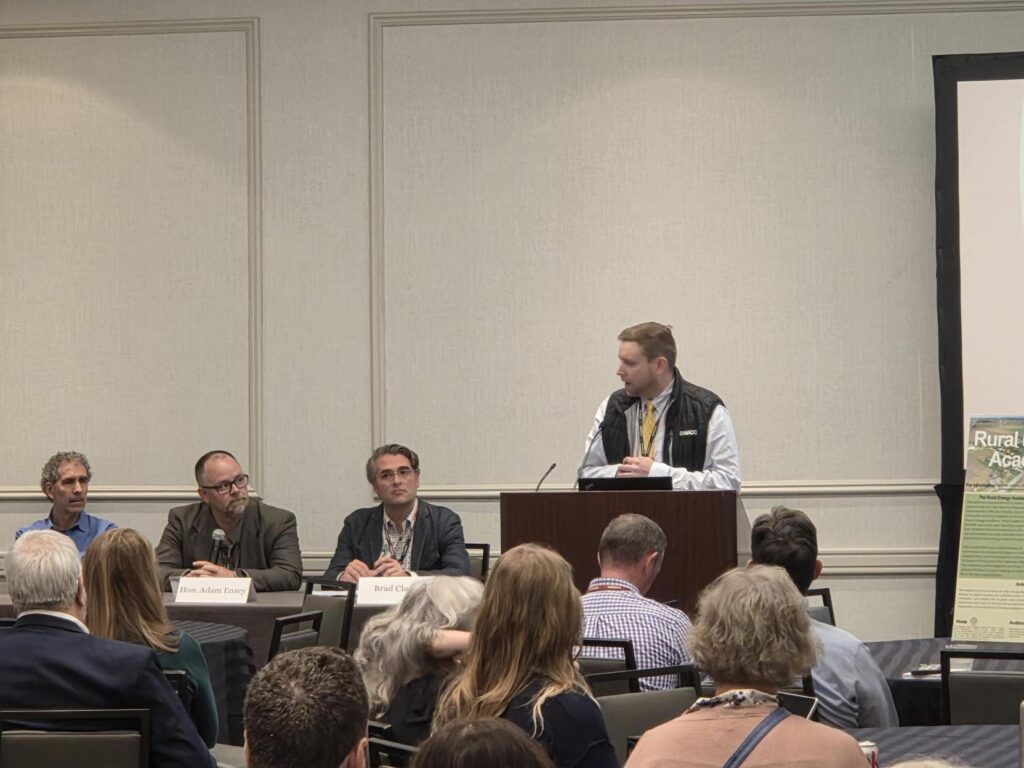
Brad Clark, Strategic Advisor, Mana Group Consulting, reflected key insights from Dr. David Adelman, Professor at the UT Austin School of Law and Hon. Adam Ensey, Armstrong County, TX Judge, who both presented earlier at the SWREDA conference on how communities can better equip themselves to navigate data center development and other energy-related projects. Dr. Adelman spoke to the economics of community benefits, noting that while most energy developers commit around 1% of total construction budgets to community benefits, most financial models can, and should, support closer to 3%. He also advocated for development agreements, where permitted, as a tool to level the playing field between local officials, economic developers, and large development companies.
Judge Adam Ensey of Armstrong County, Texas, brought firsthand experience on community negotiations from sitting across the table from developers, and his advice was direct:
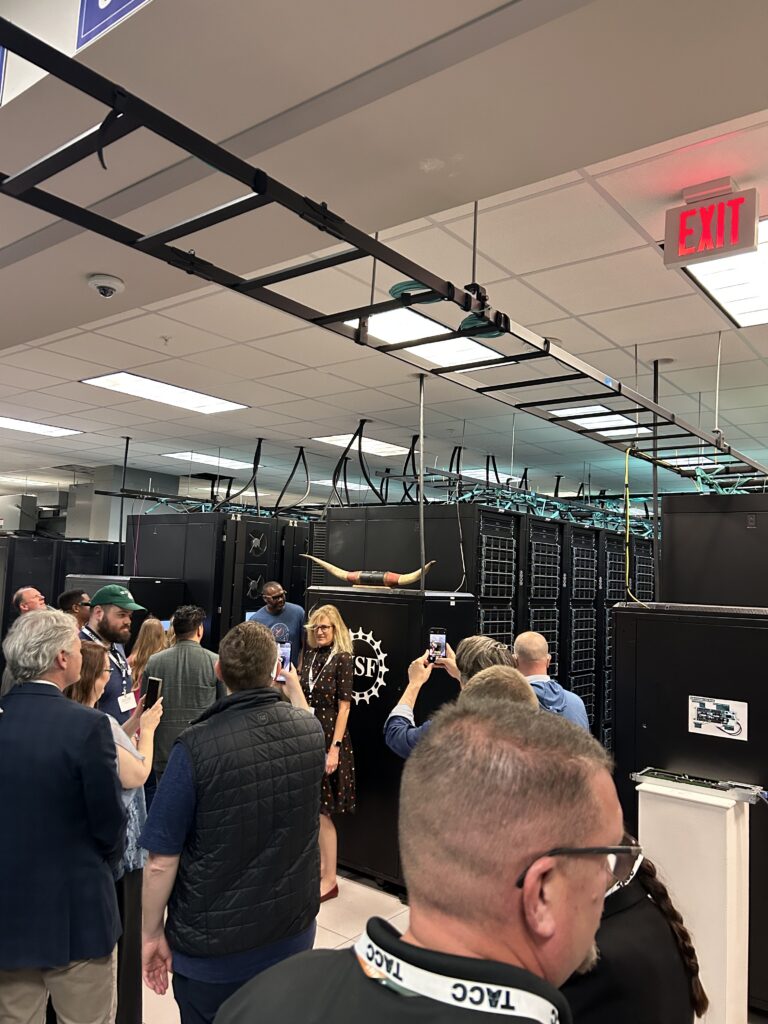
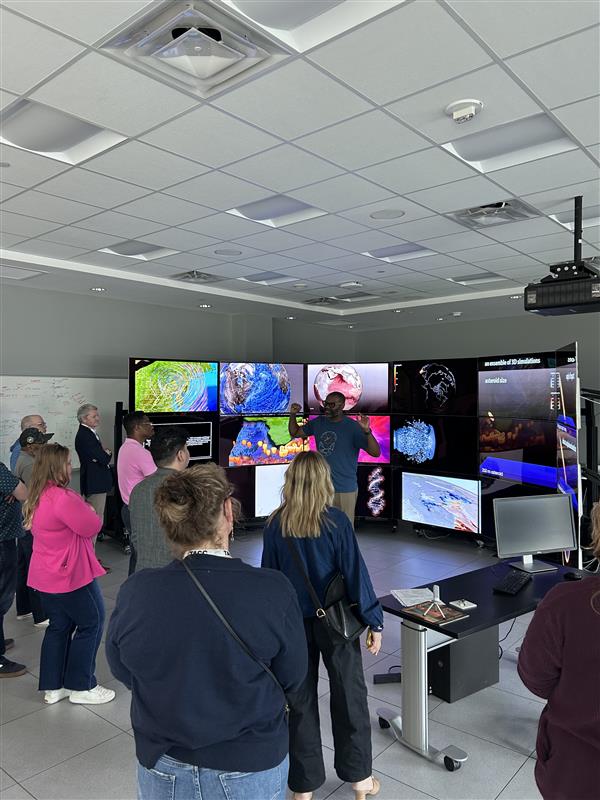
NADO’s Rural Energy Academy (REA) team toured the world’s largest university-based supercomputer data center on the University of Texas campus, observing all technical aspects of the processors, various cooling systems, structural design, the outputs of the data center and supercomputer. For many attendees, this was their first time inside a data center, providing a firsthand look at its scale, infrastructure, energy needs, and operations. The experience helped participants better understand the realities of data center development, enabling more informed research, policymaking, and economic development decisions related to data center growth.
The Rural Energy Academy is a partnership with the National Association of Counties and Mana Group and is designed to empower local leaders with the knowledge and support best needed to make energy decisions that work best for their communities.