
Overview

2026 National Regional Transportation Conference

July 20-22, 2026

(Monday-Wednesday)

Grand Hyatt Buckhead
3300 Peachtree Road, NE
Atlanta, GA 30305

From Monday, July 20 to Wednesday, July 22, transportation practitioners from across the country are invited to attend NADO and RPO America’s 2026 National Regional Transportation Conference for three days of keynote addresses, best practices presentations, trainings, mobile workshops, and networking. Participants will hear from national experts, engage in practical discussions, and share lessons learned on topics ranging from multimodal planning and infrastructure investment to emerging challenges and opportunities facing regions of all sizes.

Registration

Registration Type Registration Rate
Early Bird (on or by June 24, 2026)
$499
Regular (after June 24, 2026)
$565
RPO America Subscriber**
$465
Mobile Workshop Add-On: Path400 Walking Tour
$35
Mobile Workshop Add-On: Transportation Technology
$50
EDA Atlanta Conference Add-On
$175

**If your organization paid an RPO America Subscription for 2026, you are eligible for a discounted registration rate of $465! Email Kar’ron Grant at [email protected] to take advantage of this perk or for more information on becoming an RPO America Subscriber.

CANCELLATION POLICY

Registrants who cancel their registrations by Friday, July 10, 2026, will receive a refund minus a $150 administrative fee.
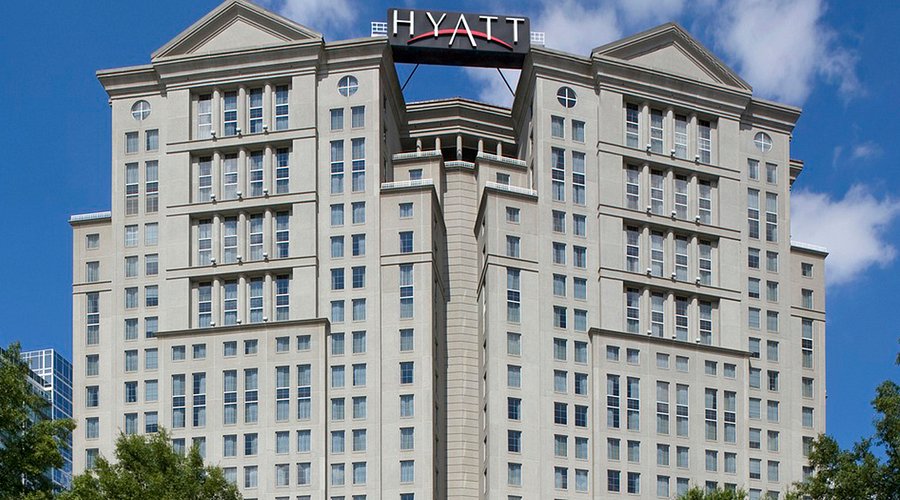

Grand Hyatt Buckhead
3300 Peachtree Road, NE
Atlanta, GA 30305
Room rate: $182 + tax

Hotel Reservation Cut-Off Date: Friday, June 19, 2026.*

*This rate is guaranteed until June 19. After this date, rooms and rates are subject to availability. Additionally, this rate applies only until our reserved room block is full, which could happen prior to June 19. We recommend making your reservation as soon as possible to secure this rate.

Program

The National Regional Transportation Conference will begin on the morning of Monday, July 20, and continue until midday on Wednesday, July 22. 

The conference will include a mix of session types, from peer presentations to training workshops and off-site tours. Click here to view the draft program as a PDF.

An additional version of the draft agenda can be viewed below.

Use a viewer such as Adobe Reader to view PDF documents.

Monday, July 20

8:00 a.m. – 5:00 p.m.
Conference Registration 

8:45-10:00 a.m.
RPO America Annual Business Meeting and RPO Council Meeting & NADO Policy Update 
All attendees are encouraged to attend the business meeting. Attendees will have the opportunity to ask questions and provide input on national-level activities. 

10:15-11:45 a.m.
Conversation Café Facilitated Networking Session 
In this interactive session, attendees shape the discussion, sharing experiences, challenges, and successes in regional transportation planning across diverse topics. 

11:45 a.m.-1:00 p.m.
Lunch on your own 

1:00-2:15 p.m.
Opening Plenary: State and Regional Partnerships 

This Transportation Planning Capacity Building (TPCB) Peer Exchange session is sponsored by the Federal Highway Administration (FHWA) and the Federal Transit Administration (FTA).  

Strong coordination between state and regional partners is essential to delivering effective transportation investments. This plenary session explores how collaborative approaches are helping regions align goals, leverage resources, and move projects forward—offering lessons applicable across diverse geographic contexts.  

Participants in this session will gain a better understanding of how to partner with other agencies at different levels of government, how to leverage resources, and move projects forward across different geographic contexts.  

This session kicks off a special peer exchange event focused on exploring the planning partnerships across levels of government that are necessary for effective transportation work in rural and small metro regions. Following the opening plenary, two additional sessions sponsored by FHWA and FTA through the TPCB Program will occur.  

2:30-4:45 p.m.
Transportation Technology Mobile Workshop
The tour will include the Glance® National Operations Center (NOC) and the Infrastructure Automotive Technology Laboratory (iATL) located in Alpharetta, Georgia. The Glance NOC is the first facility to support traffic operations and first responders across North America. The tour of the iATL includes the indoor Lab experience and outdoor demonstrations of Day One Safety Applications on the roadways of Alpharetta. Pre-registration required; additional $50 workshop registration fee. 

2:30-3:30 p.m.
Concurrent Breakout Sessions 

Connecting State & Regional Plans  


This Transportation Planning Capacity Building (TPCB) Peer Exchange session is sponsored by the Federal Highway Administration (FHWA) and the Federal Transit Administration (FTA). 
 

Oftentimes, there are transportation plans being developed and implemented at every level. It is vital for organizations to collaborate and reach out to their peers to ensure work is not being duplicated and that plans can be coordinated with each other. This session brings together professionals from different levels of the planning process to discuss how to best connect plans and initiatives together.  

Learning Objectives: Participants will gain a better understanding of how to coordinate State and Regional plans to maximize opportunities and the potential success of implementation.  

Identifying, Ranking, and Tracking Project Priorities
How do regions ensure transportation investments align with regional goals? This session examines tools and approaches for evaluating, ranking, and tracking project priorities—helping organizations make transparent, datainformed decisions. 

Participants in this session will come away with new tools to help them in the decision-making process. This session is ideal for regional planners, staff involved in the planning process, and public outreach coordinators.  

3:45-5:00 p.m.
Concurrent Breakout Sessions 

Getting to Project Implementation 


This Transportation Planning Capacity Building (TPCB) Peer Exchange session is sponsored by the Federal Highway Administration (FHWA) and the Federal Transit Administration (FTA). 
 

Moving from plans to projects remains one of the biggest challenges for regions. This featured session focuses on practical strategies for implementation, including prioritization, coordination, and overcoming common barriers to delivery.  

Participants in this session will walk away with strategies and new insights into how to overcome the gap between project ideation and implementation. 

Partnerships to Advance Transportation Safety
Safety outcomes depend on collaboration. This session highlights how regions are partnering across agencies and sectors to address roadway safety challenges, share data, and implement solutions that save lives.  

Participants in this session will learn from practitioner experience how to partner with a variety of stakeholders on safety enhancing projects, with effective safety project examples from shared from Missouri and New Mexico.  

5:00 – 6:30 p.m.
Excellence in Regional Transportation Awards Reception 
Celebrate award-winning organizations as they showcase their work and network with attendees during the reception.

Tuesday, July 21

8:30 a.m.-5:00 p.m.
Conference Registration 

9:00-11:45 a.m.
Path400 Walking Tour Mobile Workshop 
Hosted by Livable Buckhead, this session invites attendees to explore the Path400 mixed use trail. Planning staff and hired consultants will share their experiences navigating partnerships, funding, land use, and transportation impacts related to path development. Come ready to walk approximately 2.5 miles in the Atlanta morning sun. A portion of the tour has a slight incline. Participants should bring water with them. Pre-registration required; additional $35 workshop registration fee. 

9:00-10:15 a.m.
Concurrent Breakout Sessions 

Emerging Issues in Transportation Safety 
Transportation safety is evolving rapidly. This session explores emerging safety trends, policy considerations, and innovative approaches regions are using to address new and ongoing challenges.   

Participants will learn from local experts and walk away with tools to approach emerging issues in safety within their own regions.  

New and Noteworthy Regional Planning Efforts 
Learn directly from rural and small metro regions putting innovative planning approaches into practice. Presenters will share lessons learned, challenges encountered, and outcomes achieved through regional coordination and creativity. 

Participants will learn from practitioners and walk away with knowledge that equips them with the tools to tackle different planning efforts in their regions.  

10:30-11:45 a.m.
Concurrent Breakout Sessions 

Freight Transportation: Moving Our Economies 
Freight plays a critical role in regional economies. This session examines how regions are planning for freight mobility, balancing economic and community needs, and supporting efficient goods movement. 

Participants in this session will learn about how to plan for freight in their regions while still considering overall community needs.  

Measuring Progress in Transportation and Mobility Efforts 
Performance measurement is essential for accountability and improvement. This session focuses on methods regions are using to measure outcomes, track progress, and communicate results to partners and stakeholders. 

Participants will walk away with tools and knowledge to track and communicate progress to stakeholders and their own organizations. 

11:45 a.m. – 1:00 p.m.
Plenary Luncheon: National Transportation Updates
Federal, Tribal, state, regional, and local partners are busy implementing transportation programs to tackle today’s challenges. Hear about national transportation issues and about transportation grant programs available to rural and small metropolitan communities and regions. 

Participants in this session will learn about transportation news from the national stage.  

1:15-2:45 p.m.
Concurrent Breakout Sessions 

Energy Issues in Rural Transportation 
The transportation and energy fields are changing rapidly with new technologies that offer prospects for integration between the two fields. Learn from local experts and transit professionals about the emerging issues around energy in the rural transportation space from alternative fuels to infrastructure development and beyond.  

Participants in this session will learn about different energy issues and how to best prepare their communities for the future of energy in transportation.  

Rural Transit and Mobility Initiatives
Hear from transportation experts from across the country about rural transit and mobility efforts that are a vital service for their communities.  

Attendees participating in this session will hear how practitioners are identifying key survey design strategies for capturing employer, employee, and stakeholder transit demand across geographically dispersed regions, evaluate how commuter travel behavior influences regional workforce access, healthcare connectivity, and educational mobility, and recognize the role of regional partnerships in developing data-driven transportation demand models. Also hear about informational resources and programs supporting rural transit providers around the U.S. 

3:00-4:30 p.m.
Concurrent Breakout Sessions 

Listening Session
We want to hear from you! Come to this session with your needs, wants, concerns, and everything in between. Share with NADO staff so that we can work better with you and align work to your needs. 

Planning for Bicycle and Pedestrian Transportation
A
ctive transportation investments are advancing safety, access, and quality of life. This session highlights planning approaches, project examples, and partnership strategies for successful bike and pedestrian initiatives. Hear how quick build projects can offer an approachable opportunity for small communities and regions to test out bike/ped-friendly ideas in temporary ways and using low-cost materials. 

Participants in this session will learn strategies and best practices to implement bike ped into their transportation planning processes and efforts. 

Wednesday, July 22

8:30-11:00 a.m.
Conference Registration 

9:00-10:15 a.m.
Concurrent Breakout Sessions 

Transportation Reconnection
Explore how regions are addressing past transportation decisions that divided communities. This session focuses on reconnection strategies, equitable planning, and integrating transportation investments with broader community goals. 

Participants in this session will learn about how to reconnect communities through transportation planning and how to ensure that everyone can participate throughout the planning process.  

GIS and Regional Planning
Geospatial tools are increasingly central to regional transportation planning. This session highlights how regions are using GIS to support analysis, coordination, and decision-making across jurisdictions. 

Participants in this session will walk away with knowledge on how to creatively use GIS in their regions to support the planning process.  

10:30 a.m. – Noon
Closing Plenary: Collaborating to Advance Transportation and Economic Development 
State agencies, regional organizations, and local governments have long worked together to identify both transportation needs and economic development and to deliver projects for both areas. Although most basic outcomes have stayed constant (such as safe, reliable movement of people and goods), planning for transportation projects and economic development has become more complex. Learn from experts on how to tie transportation planning and economic development together through things like the CEDS development process and more. 

Participants in this session will walk away with a better understanding of how to weave together transportation and economic development to lead to better outcomes for both.

Search NADO.org