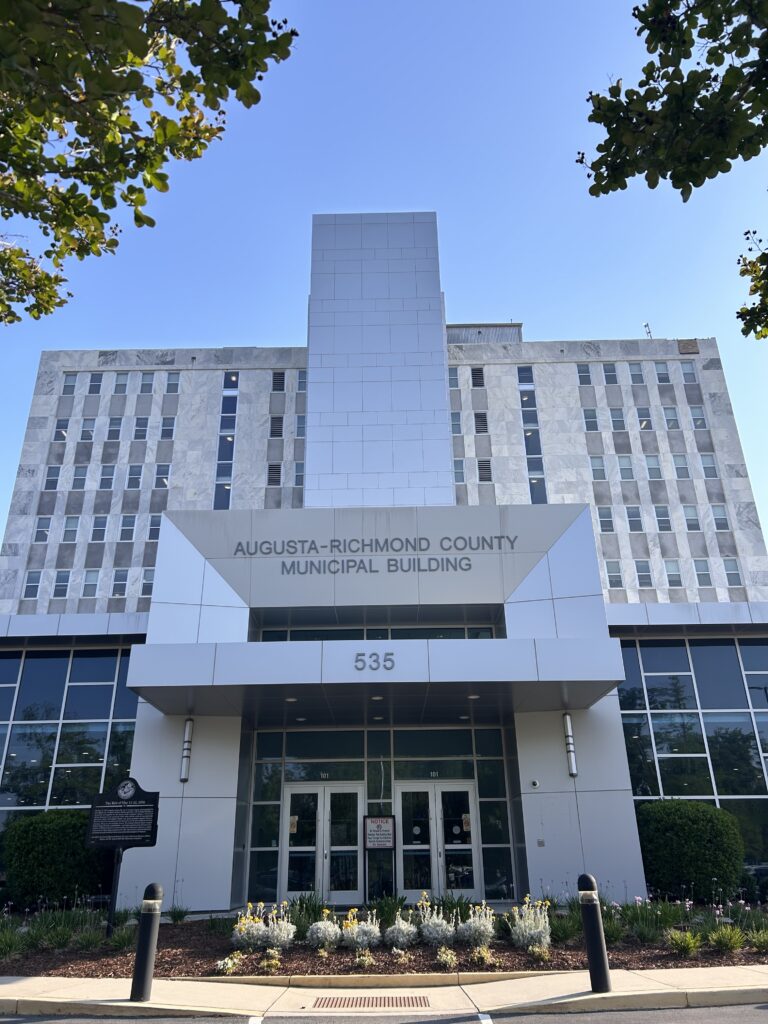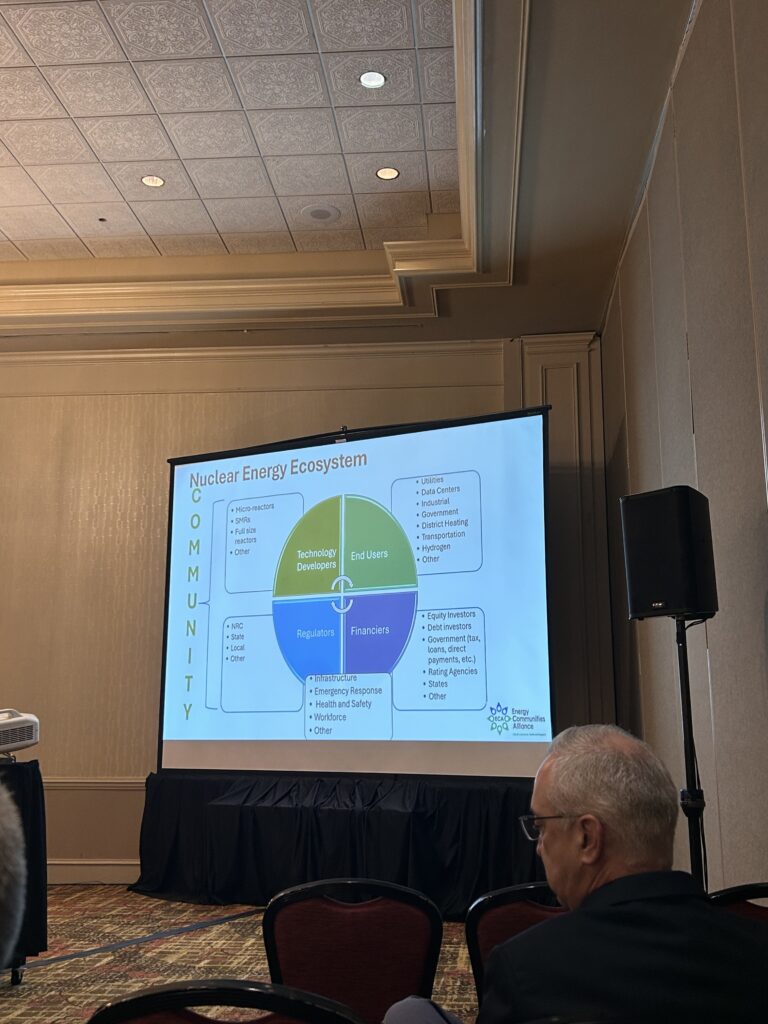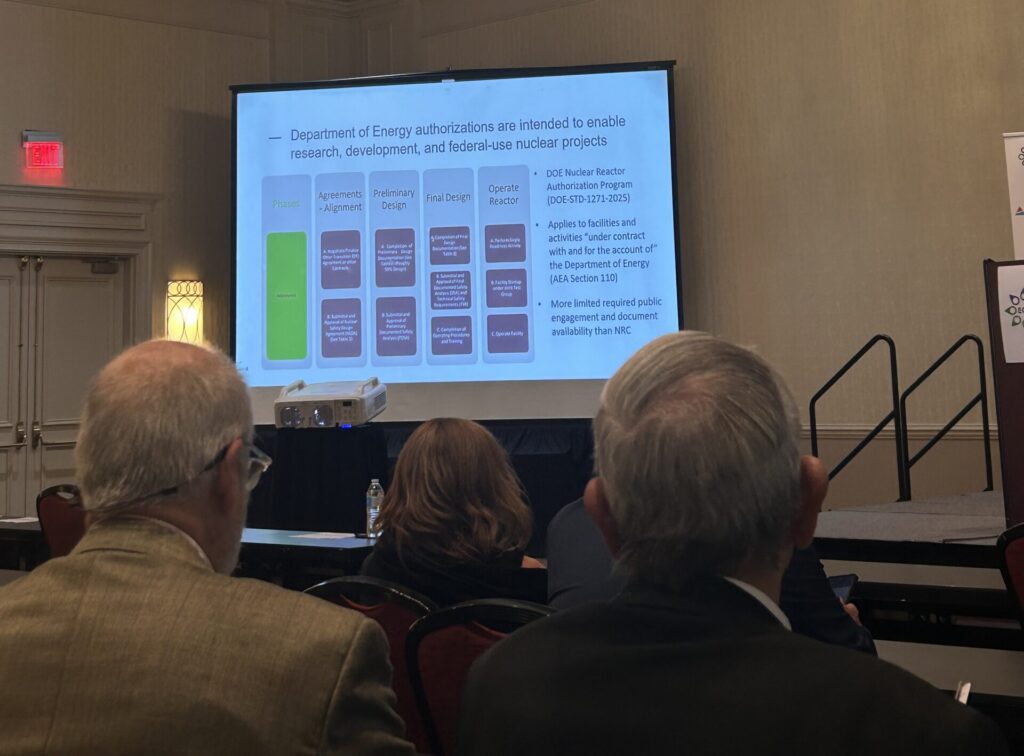
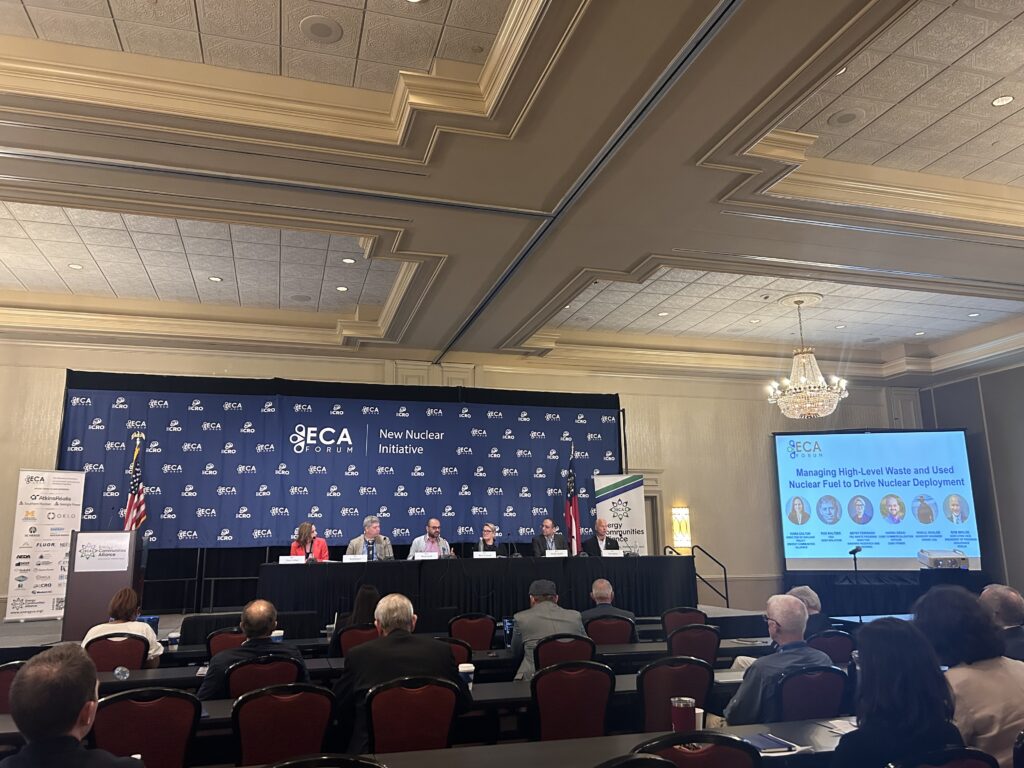
In April 2026, Energy Communities Alliance (ECA) hosted their fifth annual forum in Augusta, Georgia. ECA is a non-profit membership association that supports local governments and communities impacted by nuclear facilities in the US by establishing policy positions, sharing information, and promoting community interests. The gathering, titled “The Business of Nuclear: Communities & Industry Working Together,” convened nuclear industry leaders, energy planning practitioners, economic developers, county and local elected officials, advocacy groups and federal representatives to discuss the current and future state of new nuclear energy across the country. The ECA Forum, in partnership with Department of Energy’s (DOE) National Nuclear Security Administration (NNSA), created a space for learning, collaboration, and excitement about what’s next on the horizon for nuclear.
London Weier, NADO Program Manager, attended the forum and met with a wide range of representatives from private industry to public office holders. The ECA Forum presented an opportunity to explore new connections and build expertise in the field of new nuclear in support of NADO’s work with NACo’s Rural Energy Academy.
Community engagement and relationship building were at the heart of facilitated discussions and panels throughout the forum. Sessions titled Finding Partners & Building Community Support and Community Initiatives Building Momentum for Deployment exemplify a clear need and desire to bring together partners with diverse skills and experiences. After decades of nuclear hesitation due to various power plant accidents, such as the Three Mile Island accident, the nuclear energy industry is experiencing a period of rebirth, in no small part due to AI’s expansion and need for significant amounts of energy. Demand for nuclear has been growing for a few years now, and that factor combined with improvements in waste and safety technology make nuclear’s comeback more reality than pipedream.
Some forum participants attended a visit to the Savannah River Site (SRS), a DOE and NNSA industrial complex about 30 minutes outside of Augusta. In the 1950’s, SRS facilities were used for nuclear weapons material production. Today, the site’s primary focus has shifted toward “environmental stewardship, environmental cleanup, nuclear waste management and disposition of nuclear materials.” This focus is changing once again as investments in the nuclear industry begin to grow again. Once project in particular is the construction of a specialized training facility for plutonium pit production, one of the key products that make up a nuclear warhead. The site’s growing mission reflects a broader trend in the nuclear industry; the funding floodgates are opening, from both the private and public sectors.
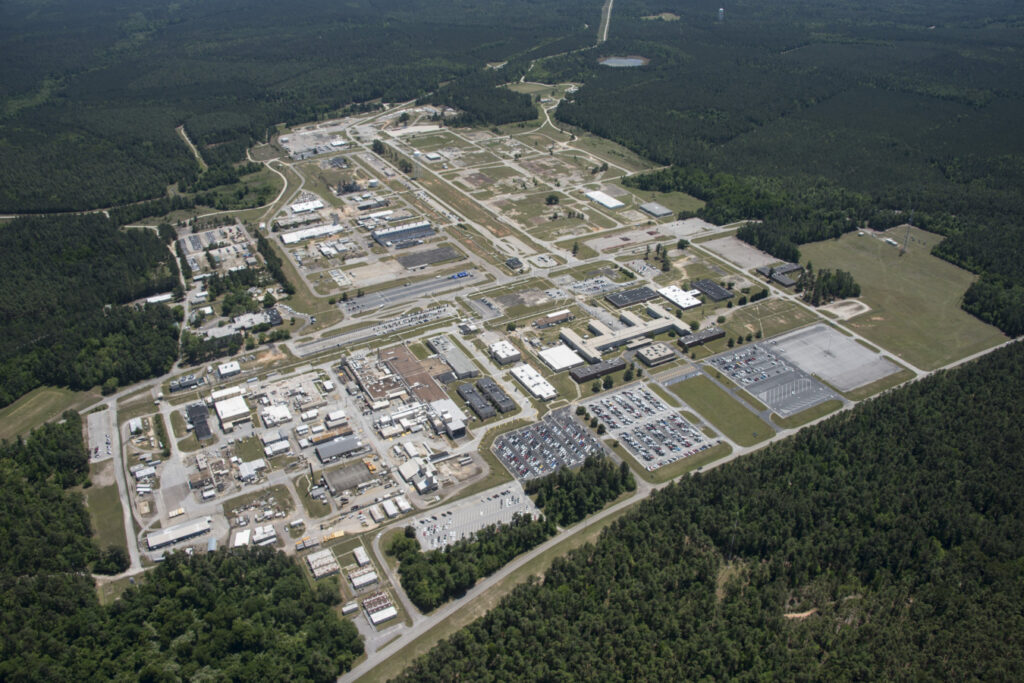
As conveners and connectors across sectors, regional development organizations can bring stakeholders from across communities to the table on nuclear issues. According to a DOE workforce report in 2025, Savannah River Site employed around 13,000 people. It takes a region to meet those needs, not just one town or county. Not every region can expect or count on a facility the size of SRS to come to their community, but no matter the size, nuclear facilities need operations staff just as much as they need nuclear engineers. Additionally, this kind of infrastructure is costly to local resources under construction and throughout their lifetime as they need water, energy, and lots of space. Regional Development Organizations (RDOs) know their communities and can advocate for them early on if an opportunity in nuclear comes to their area.
Below are some key takeaways for RDOs interested in strengthening existing or creating new relationships with the nuclear energy industry in their regions: