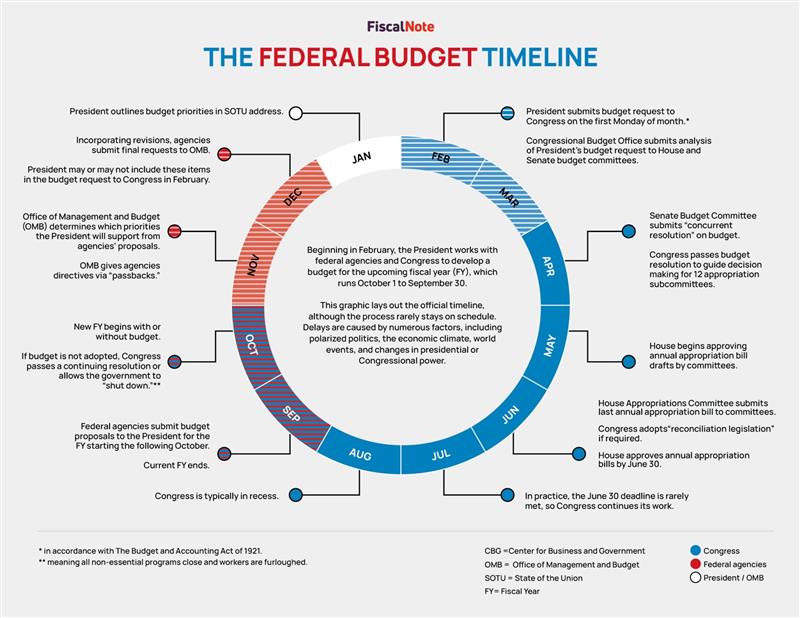
As August recess approaches, Congress continues to work through the annual appropriations process for Fiscal Year (FY) 2026. While some progress has been made, there is still a long road ahead to avoid a government shutdown and ensure stable funding for key federal programs.
Where Things Stand: Status of the FY 2026 Appropriations Cycle
The House and Senate Appropriations Committees have advanced a number of their respective FY 2026 bills, but full passage in either chamber has been slow.
As of July 25, the House has approved 9 of 12 bills out of committee and has passed 2 of 12 appropriations bills on the floor. The Senate has approved 6 of 12 bills out of committee but none have been considered on the floor. The House has adjourned for August recess, and the Senate will adjourn on August 1 for the month-long recess.
For FY26, the House and Senate have released proposed funding levels for several key federal programs, revealing significant differences from FY25 funding levels. In FY25, the Economic Development Administration (EDA) received $468 million in total appropriations. The House has proposed a FY26 funding level of $324.5 million—$143.5 million below the previous year—while the Senate recommends $426 million, a $42 million reduction. Within EDA, the Economic Development Assistance Programs were funded at $400 million in FY25; the Senate proposes $360 million for FY26, but the House has not specified an amount. Funding for EDA Partnership Planning Grants also remains unspecified in both chambers.
Additionally, USDA Rural Development is level-funded at $1.62 billion by both the House and Senate, matching FY25 levels. The HOME Investment Partnerships Program faces a more uncertain future: it received $1.25 billion in FY25, but the House proposes eliminating funding entirely in FY26, while the Senate seeks to level fund the program at $1.25 billion. The Community Development Block Grant (CDBG) formula program was funded at $3.3 billion in FY25 and is maintained at that level in the House’s proposal.
Next Steps: What’s Ahead and the Risk of a Shutdown
Congress is on a tight timeline to complete the appropriations process before the end of the fiscal year on September 30, 2025. Given the current pace and significant gaps between House and Senate proposals, a Continuing Resolution (CR) is widely expected to keep the government funded at current levels past October 1, which is the start of the new fiscal year. Without a CR or full-year appropriations, a government shutdown would occur.
Key Dates to Watch: